Picture this: it's 2026, and your corner of the world hums with decentralized IoT potential. Do you splurge on a Helium Hotspot to blanket vast areas with LoRaWAN signals for sensors and trackers, or tweak your existing WiFi router via Helium Plus for seamless network contributions? The choice boils down to helium hotspots iot versus everyday routers in the DePIN wireless arena, where cost and coverage dictate your slice of the HNT pie. With Helium's network boasting over 376,000 active hotspots and pivoting toward WiFi ubiquity, let's dissect why one might eclipse the other for smart homes and businesses chasing passive income.
Helium's evolution isn't just hype; it's a pragmatic shift. Traditional cell towers? Obsolete relics. Hotspots and routers now crowdsource coverage, earning you HNT tokens as devices tap the network. But in the wifi vs helium hotspots showdown, upfront costs reveal stark contrasts that could make or break your 2026 entry.
Hotspots Demand Hardware Hustle While WiFi Routers Ride the Software Wave
Deploying a Helium Hotspot means opening your wallet wide. These LoRaWAN powerhouses typically run $200 to $500, not counting antennas or mounts that can tack on another $100. Why the premium? You're buying rugged gear optimized for long-range IoT signals, piercing buildings and spanning miles for asset trackers or environmental monitors. In dense deployments, like urban warehouses powering decentralized iot 2026 fleets, that investment shines.
Contrast that with Helium Plus, launched mid-2025 to supercharge your WiFi router. No new boxes; just a software flash turns your $50 garage-sale find or premium mesh system into a network node. Over 600 million routers worldwide means instant scale, especially in cities where LoRaWAN struggles with interference. This low-barrier play democratizes DePIN, letting renters and apartment dwellers join without landlord drama.
Yet, hotspots aren't dinosaurs. Their dedicated hardware ensures reliability for mission-critical IoT, where WiFi's shorter hops falter. If you're eyeing rural setups or off-grid sensors, that $300-500 buy-in positions you for steadier helium network coverage. WiFi? It's urban opportunism, perfect for high-traffic spots but needy on power and internet uptime.
Coverage Kingdoms: LoRaWAN's Long Reign Meets WiFi's Dense Domination
Coverage defines winners in depin wireless comparison. Helium Hotspots excel here, pushing LoRaWAN signals 5-15 kilometers in open terrain, ideal for agriculture drones or logistics tags zipping across farms. By early 2026, these hotspots have shuttled over 1,087 TB of data, proving backbone status for global IoT. Place one on your roof, and you're bridging dead zones traditional carriers ignore.
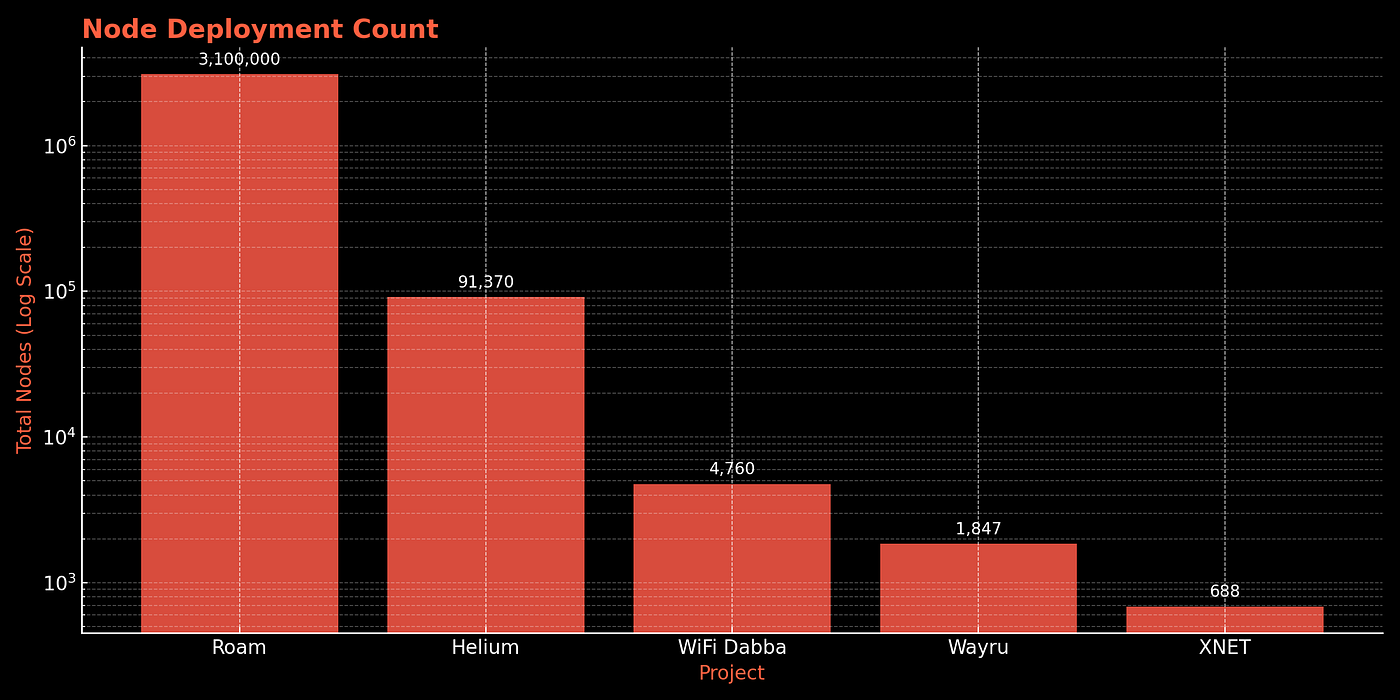
WiFi routers, via Helium Plus, flip the script indoors and tight-knit outdoors. Expect 50-300 meters per unit, but chain millions together, and urban blankets form effortlessly. Think apartment blocks or cafes where phones and smart bulbs crave constant pings. The pivot from CBRS spectrum to WiFi, as seen with Helium and Xnet, acknowledges this: why fight for rare airwaves when routers are everywhere?
Real-world nuance? Hotspots thrive where IoT whispers over distance; WiFi roars in people-packed zones. Hybrid setups loom as the smart bet, but for solo operators, assess your turf. Rural? Hotspot. City slicker? Router upgrade. Reddit skeptics gripe about IoT sustainment costs, yet 376,000 and hotspots signal resilience, with WiFi poised to swell ranks further.
Rewards Reality: HNT Yields from Hotspots to Household Hubs
Earnings paint the profit picture. Hotspot operators net $0.10-$1.50 daily now, or $3-$45 monthly at HNT's $0.8111 perch, down from glory days due to saturation. Still, prime locations juice rewards via data relayed for IoT payloads. Factors like transmit scale and nearby proof-of-coverage dictate your haul, rewarding strategic spots over sheer numbers.
Helium Plus? Data's nascent, but zero hardware cost flips ROI math. High-traffic routers could match or beat hotspots passively, especially as adoption surges. With HNT at $0.8111, even modest relays compound, fueling network flywheels. Critics flag IoT infra bills, but decentralized servers and WiFi influx promise longevity.
Helium (HNT) Price Prediction 2027-2032
Forecasts based on DePIN growth, IoT adoption, Helium Hotspots vs. Wi-Fi routers via Helium Plus, and market cycles (baseline: ~$1.20 avg end-2026)
| Year | Minimum Price | Average Price | Maximum Price | YoY % Change (Avg) |
|---|---|---|---|---|
| 2027 | $0.90 | $2.80 | $6.50 | +133% |
| 2028 | $1.80 | $4.50 | $11.00 | +61% |
| 2029 | $2.50 | $7.20 | $16.00 | +60% |
| 2030 | $3.50 | $11.00 | $24.00 | +53% |
| 2031 | $5.00 | $16.50 | $35.00 | +50% |
| 2032 | $7.00 | $24.00 | $50.00 | +45% |
Price Prediction Summary
HNT is forecasted to experience substantial growth through 2032, propelled by Helium Plus enabling Wi-Fi routers to boost network density at low cost, surging IoT data demands, and DePIN market expansion. Average prices could multiply over 20x from 2026 levels by 2032 in bullish scenarios, though mins account for regulatory and competitive risks.
Key Factors Affecting Helium Price
- Rapid network scaling via Helium Plus Wi-Fi integration reducing entry barriers
- IoT device proliferation and LoRaWAN/5G coverage expansion
- Declining hotspot earnings offset by mass Wi-Fi participation
- Regulatory developments in decentralized wireless infrastructure
- Competition from telcos and rival DePINs (e.g., Xnet)
- Broader crypto market cycles and Bitcoin halving influences
- Tech upgrades improving efficiency and earnings potential
Disclaimer: Cryptocurrency price predictions are speculative and based on current market analysis. Actual prices may vary significantly due to market volatility, regulatory changes, and other factors. Always do your own research before making investment decisions.
Opinion: Hotspots suit committed players chasing helium hotspots iot dominance; WiFi routers lure the masses into decentralized iot 2026. Your setup's context crowns the champ.
Strategic placement turns these tools into income engines. Imagine a farmer in rural Iowa mounting a hotspot atop a silo, relaying data from soil sensors across acres, pocketing HNT for every ping. Earnings might hover at $0.8111 per token relayed, but volume from underserved areas multiplies rewards. Urban dwellers, meanwhile, activate Helium Plus on their Eero or Netgear, capturing offload from congested carriers in coffee shops or co-working spaces.
Real-World Scenarios: Farms to Factories
Agriculture screams for hotspots. LoRaWAN slices through fields, connecting tractor telematics and livestock collars without cell plans. Businesses like logistics firms deploy them in yards, tracking pallets with helium network coverage that sidesteps tower blackouts. Earnings? Steady if you're first in sparse zones, dipping in saturated cities where WiFi edges in.
Factories and smart homes favor WiFi's precision. Indoor IoT thrives on short bursts: thermostats, cameras, EV chargers. Helium Plus blankets these without drilling roofs or zoning fights. A warehouse stacking hotspots risks overlap penalties; routers mesh silently, scaling with employee density. Hybrid wins emerge: hotspot for perimeter, routers inside.
Challenges persist. Hotspots guzzle electricity and demand ethernet backhaul, uptime critical for proofs. WiFi routers hitch to your ISP; outages kill yields. Both face HNT volatility at $0.8111, yet network effects promise uplift as IoT explodes: 75 billion devices by 2030 crave decentralized pipes.
Future-Proofing Your Play: Scalability and Network Synergies
Helium's WiFi pivot isn't retreat; it's conquest. Pairing 376,000 hotspots with billions of routers forges unbreakable coverage. By late 2026, expect Helium Plus dashboards tracking granular relays, AI optimizing placements. Investors eye this: DePIN wireless flips $1 trillion telecom spends into token incentives.
Skeptics on Reddit lament IoT costs, but decentralized LNS servers and WiFi economics counter that. Hotspots evolve too, with 5G hybrids blending mobile offload. Your edge? Start small. Test a $200 hotspot in low-density spots or flash your router free. Monitor via apps, iterate on earnings.
Opinionated take: Don't chase hype; map your micro-climate. Rural innovators grab hotspots for depin wireless comparison supremacy. Urban hustlers unleash WiFi hordes. Both propel decentralized iot 2026, but routers' zero-capex allure might dominate, swelling the network to critical mass.
Action step: Audit your space. Got open skies and IoT dreams? Snag a hotspot. Router-rich and people-dense? Upgrade to Plus. Either path stakes your claim in Helium's air empire, where coverage cashes checks and connectivity crowns kings.


No comments yet. Be the first to share your thoughts!