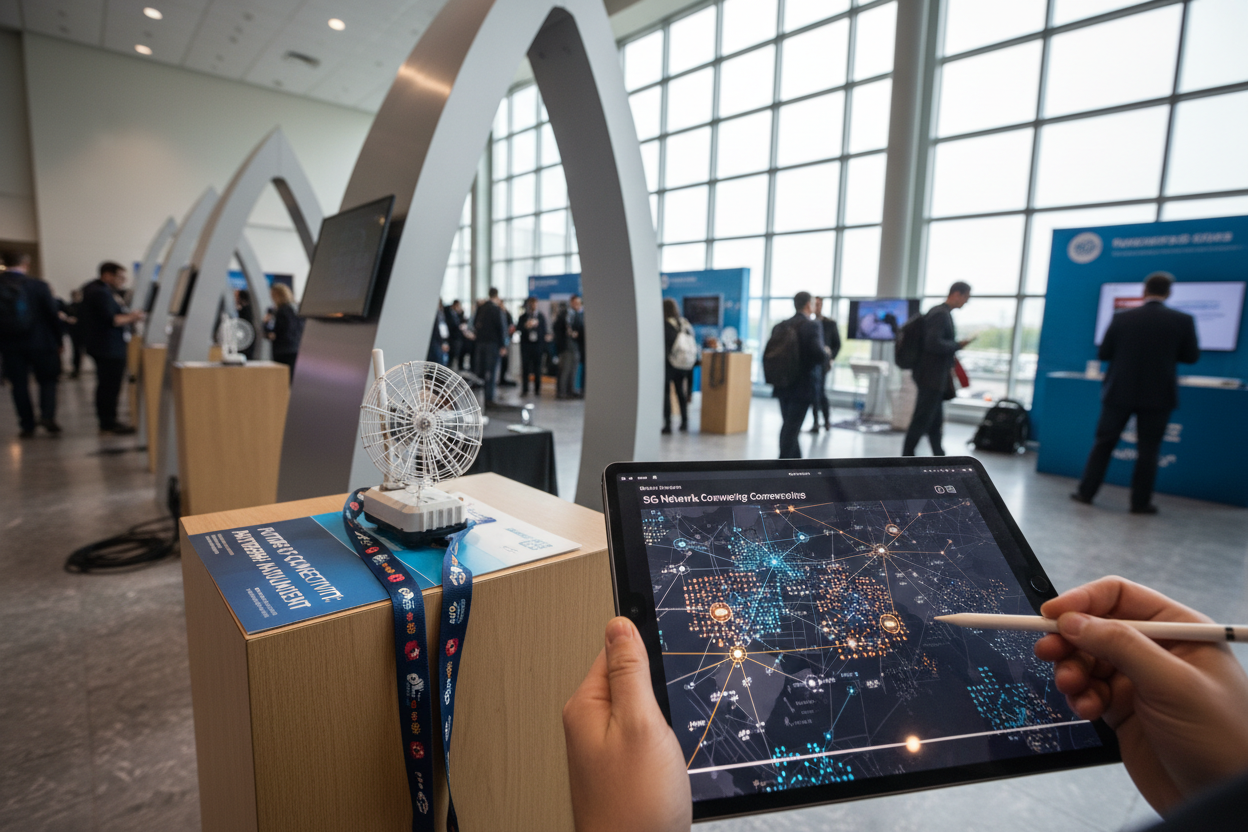


In the evolving landscape of decentralized wireless networks, Depinsim DePIN eSIM emerges as a game-changer, blending eSIM technology with blockchain incentives to monetize mobile data sharing. Unlike Helium’s hotspot model, which boasts 702 active mobile devices averaging $1.08 daily earnings per unit at a $259.2 cost, Depinsim leverages everyday smartphones for global connectivity. This shift empowers users to earn passively without bulky hardware, tapping into a tokenized economy across 190 and countries.

[price_widget: Real-time DEPIN price at $0.000571, 24h change -0.4289%, high $0.001299 low $0.000571]
Depinsim’s Edge Over Helium in DePIN Wireless
Helium’s journey from IoT hotspots to tokenized 5G, as detailed in Hilary H. Brown’s Medium analysis, showcases DePIN fundamentals. Migrating to Solana boosted its scalability, yet challenges persist with device deployment. Depinsim sidesteps this by using built-in phone eSIMs and Trusted Execution Environments (TEE) for anti-sybil security, as highlighted in Fluence’s YouTube discussion on DePIN eSIM connectivity. No need for $259 hotspots; your phone becomes the miner.
Current DEPIN price sits at $0.000571, reflecting a 24-hour dip of $-0.000430 (-0.4289%), with a daily high of $0.001299 and low matching the current $0.000571. This volatility mirrors broader DePIN trends seen in Helium (HNT), but Depinsim’s model promises stickier user engagement through direct data top-ups. KuCoin and BingX lists rank Helium top among 2025 DePIN projects for mobile coverage, yet Depinsim positions as a Helium eSIM alternative, focusing on consumer devices for real-world attestations.
DePIN projects like Helium empower individuals to own and monetize physical assets, per Binance insights. Depinsim extends this to intangible data flows.
Unlocking Rewards: Connection Fuels the Depinsim Loop
At its core, Depinsim runs on the Free Mobile Internet Protocol (FMIP), creating a closed value loop: connection generates rewards, which recharge data or convert to stablecoin $PIN. Users earn in three straightforward ways-activating mining via app for passive income, task completion, or data usage itself. Native token $ESIM handles staking, payments, and rewards, with a supply tuned for ecosystem growth.
Imagine roaming seamlessly in 190 and countries, earning $ESIM without Web2 intermediaries. Atomic Wallet’s take on Helium mining underscores decentralized IoT innovation; Depinsim amplifies this for mobile broadband. Messari classifies Helium as a wireless DePIN coordination layer-Depinsim builds atop it, tokenizing idle bandwidth much like Render or Akash decentralize compute.

To check and claim your rewards, please visit: 👉 https://t.co/IvrPCc6h0M
and log in with the same wallet address you QT with.
Thanks everyone for joining 🤝
From Protocol to Powerhouse: The $8 Million Catalyst
October 2025 marked a pivotal moment: Depinsim secured $8 million in strategic funding led by Outlier Ventures. This infusion accelerates global expansion and partnerships, positioning Depinsim DePIN against incumbents. Tech Times notes DePIN devices’ transparency via blockchain; Depinsim’s eSIM approach scales this to billions of phones, potentially exploding like Helium’s IoT-to-5G pivot.
DePIN Scan’s Helium Mobile Explorer reveals modest 702 devices online, hinting at adoption hurdles. Depinsim counters with frictionless onboarding-no hardware shipping, just app activation. As Helium’s ecosystem health focuses on LoRaWAN for IoT per official docs, Depinsim targets high-speed mobile data, blending decentralized eSIM with earn mobile data blockchain mechanics.
Depinsim DePIN (DEPIN) Price Prediction 2027-2032
Forecast incorporating DePIN sector growth, $8M funding impact, eSIM adoption, and crypto market cycles
| Year | Minimum Price | Average Price | Maximum Price | YoY % Change (Avg) |
|---|---|---|---|---|
| 2027 | $0.00050 | $0.0020 | $0.0080 | +250% |
| 2028 | $0.0015 | $0.0060 | $0.025 | +200% |
| 2029 | $0.0035 | $0.015 | $0.060 | +150% |
| 2030 | $0.0080 | $0.035 | $0.140 | +133% |
| 2031 | $0.015 | $0.075 | $0.300 | +114% |
| 2032 | $0.030 | $0.140 | $0.600 | +87% |
Price Prediction Summary
Depinsim DePIN (DEPIN) is forecasted to experience substantial growth from its 2026 price of $0.000571, driven by DePIN fundamentals akin to Helium’s success, $8M funding for global expansion, and eSIM-enabled mobile data monetization. Average prices project a bullish trajectory to $0.140 by 2032 (over 24,000% cumulative growth), with min/max ranges capturing bearish market corrections and hyper-adoption scenarios.
Key Factors Affecting Depinsim DePIN Price
- DePIN sector expansion and parallels to Helium’s IoT/5G evolution with 700+ active devices and real earnings.
- $8M strategic funding (Oct 2025) enabling accelerated global rollout in 190+ countries.
- eSIM technology and FMIP protocol driving seamless roaming, data mining, and tokenized rewards ($ESIM/$PIN).
- Crypto market cycles: post-2026 recovery into 2027-2028 bull phase.
- Regulatory tailwinds in telecom-blockchain integration and DePIN incentives.
- Competition from Helium, Render, Akash; differentiation via consumer mobile eSIM access.
- Technological advancements in anti-sybil security, staking, and closed-loop value (connect → reward → reconnect).
Disclaimer: Cryptocurrency price predictions are speculative and based on current market analysis.
Actual prices may vary significantly due to market volatility, regulatory changes, and other factors.
Always do your own research before making investment decisions.
Early adopters eye Depinsim airdrop rumors, fueling buzz in DePIN wireless networks. With DEPIN at $0.000571, down -0.4289% today, the setup recalls Helium’s fundamentals-driven rally. Blockchain eSIM rewards democratize connectivity, letting users thrive in a tokenized data economy.
That $8 million from Outlier Ventures isn’t just cash- it’s rocket fuel for Depinsim DePIN, enabling hires, tech upgrades, and ecosystem tie-ups that could mirror Helium’s Solana migration success. While Helium grapples with hotspot logistics, Depinsim’s app-first model slashes barriers, turning smartphones into revenue streams via blockchain eSIM rewards. Picture this: you’re in Tokyo or Berlin, data flowing through FMIP, accruing $ESIM without lifting a finger beyond app toggles.
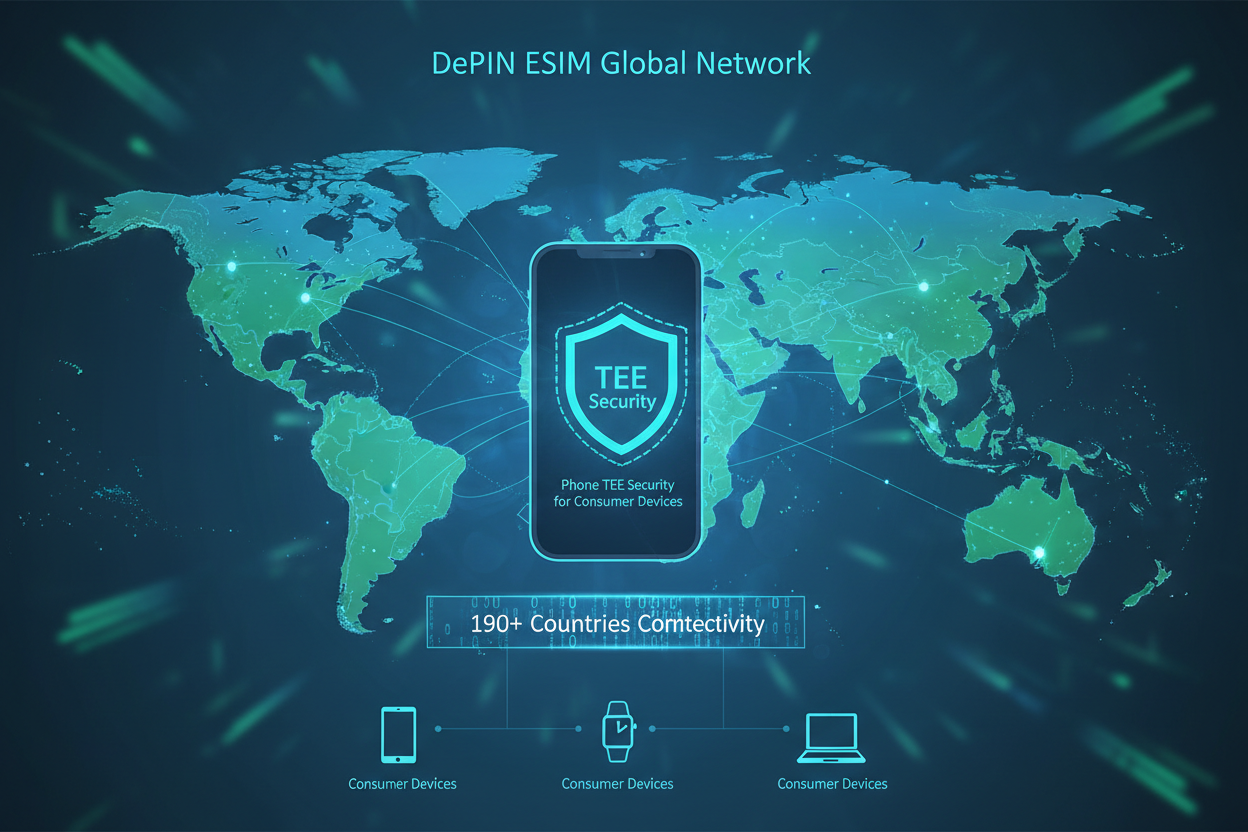
Depinsim’s genius lies in that closed loop- earn from connections, spend on data, repeat. No more predatory carrier plans; instead, a tokenized marketplace where idle bandwidth pays dividends. Helium’s 702 devices earn a modest $1.08 daily average, but scale Depinsim to millions of eSIM-enabled phones, and you’re talking network effects on steroids. DePIN Scan data underscores Helium’s niche; Depinsim aims broader, chasing the mobile data gold rush KuCoin flags for 2025.
Everyday Earners Unite: Three Paths to $ESIM Rewards
Ways to Earn on Depinsim
-

Activate app mining for passive income from sharing mobile data via eSIM in 190+ countries.
-

Complete simple tasks to earn bonus $ESIM tokens.
-

Monetize data usage directly—convert rewards to $PIN stablecoin or eSIM data top-ups.
Passive mining via your phone’s eSIM feels effortless, sidestepping Helium’s hardware hustle. Tasks add gamified boosts, while pure usage rewards heavy roamers- ideal for digital nomads. This trinity outshines Web2 data caps, fostering loyalty in DePIN wireless networks. Messari’s Helium overview nods to its DePIN roots; Depinsim evolves it, proving consumer devices unlock sybil-resistant scale, as Fluence demos with TEE attestations.
At $0.000571, DEPIN trades with a 24-hour change of $-0.000430 (-0.4289%), dipping from a high of $0.001299 to today’s low of $0.000571. Skeptics see red flags in volatility, but I view it as entry-point gold for trend-savvy plays. Helium’s IoT pivot taught us DePINs mature from hype to heft; Depinsim, fresh off funding, skips infancy pains.
Depinsim turns global roaming into a reward engine, where your phone’s data becomes decentralized gold.
Risks, Realities, and the Road Ahead
Let’s temper optimism: regulatory scrutiny on tokenized telecom could snag eSIM rollouts, and competition from Helium Mobile or nascent rivals looms. Yet Depinsim’s $PIN stablecoin bridges fiat-crypto gaps, while FMIP’s 190 and country coverage dodges single-market woes. Tech Times spotlights DePIN transparency; here, every byte tracked on-chain builds trust absent in telco black boxes.
Community whispers of a Depinsim airdrop add sizzle, potentially mirroring early Helium miner booms. Binance charts DePIN explosions via Helium, Render, Akash- Depinsim slots in as the mobile disruptor. Atomic Wallet praises Helium’s IoT mining; extend that to broadband, and you’ve got a blueprint for mass adoption.
Owners of compatible phones- think recent iPhones or Android flagships- download the app, stake $ESIM, and join the fray. Early metrics? Funding validates the thesis, and with DEPIN holding at $0.000571 amid a -0.4289% day, patient holders eye rebounds tied to user growth. Helium’s LoRaWAN health per official stats pales against Depinsim’s broadband ambition.
Depinsim doesn’t just compete as a Helium eSIM alternative; it redefines earn mobile data blockchain participation. In a world of centralized carriers squeezing margins, this protocol hands power back, one shared gigabyte at a time. Adapt to the shift, deploy your device, and watch connectivity compound.
About the Author