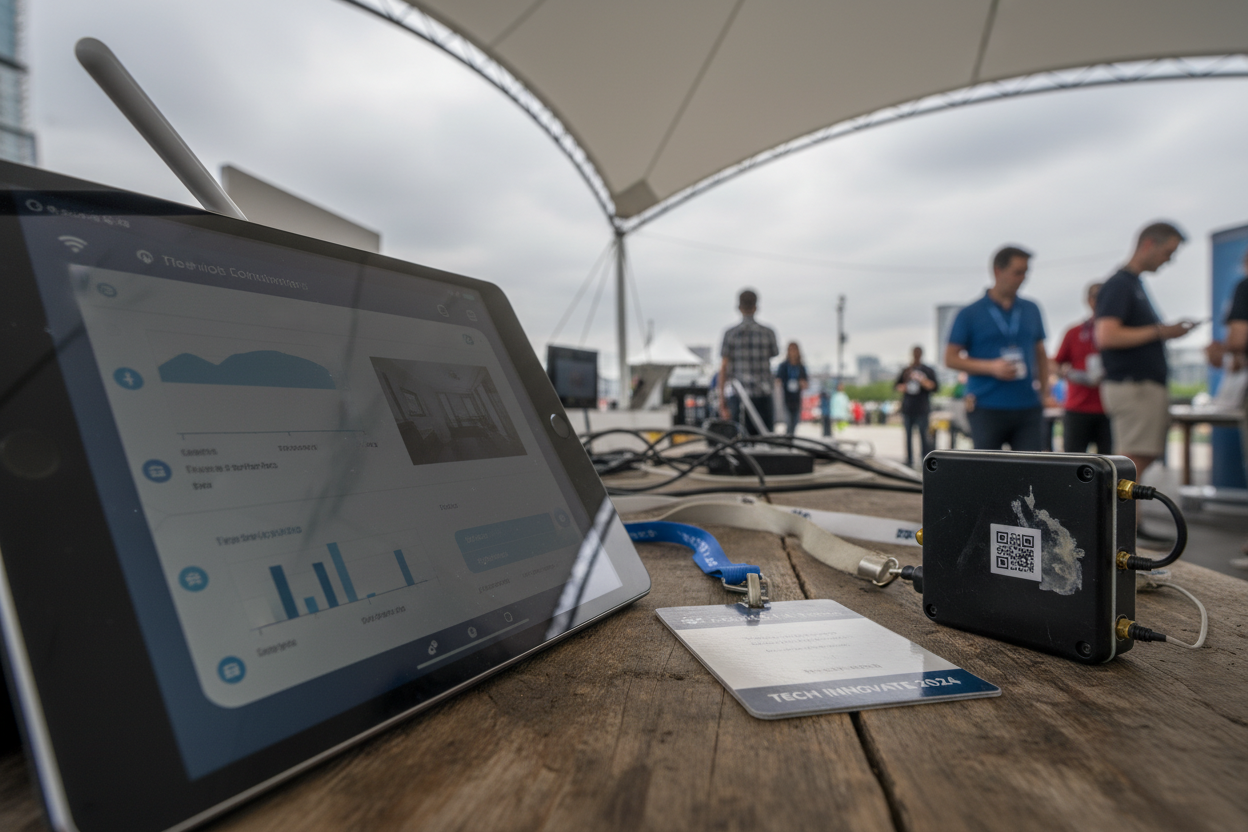


Helium hotspots have quietly solidified their position as a revenue powerhouse in the DePIN space, generating an estimated $1.7 million in monthly fees across WiFi and IoT networks as of late 2025. This figure underscores a maturing ecosystem where community-deployed devices deliver real-world utility, outpacing early hype with sustainable economics. At a time when HNT trades at $1.90, these earnings reflect not just network growth but a shift toward dependable decentralized IoT coverage and DePIN WiFi networks.

With over 400,000 active hotspots spanning 80 countries, Helium’s infrastructure rivals traditional telecoms in reach while slashing deployment costs. Operators earn HNT by providing coverage and data transfer, turning passive hardware into income streams. Recent initiatives like the $50 million Helium Foundation grant in May 2025 and Helium Plus in July have accelerated this expansion, enabling businesses to leverage existing WiFi routers without new hardware outlays.
Helium Hotspot Economics: Low Barriers & Strong ROI 🚀
| Type 📶 | Onboarding Cost 💳 | Device Cost 🛍️ | Daily Earnings 💰 | Break-Even ⏳ | Key Plans 📋 |
|---|---|---|---|---|---|
| IoT 🌐 | $10 DC + ~$0.0037 SOL | $199 | $0.53 | 375 days | $0.20/500KB to $41/100MB |
| Mobile 📱 | $40 DC + ~$0.0053 SOL | $199 | $0.53 | 375 days | Zero: 3GB free 🆓 $7.50/GB add-ons $20 Unlimited |
Operators report steady returns; one example cites $75 monthly or $900 annually per setup, a reliable yield without millionaire promises. This community-driven model thrives in underserved areas, where traditional carriers falter.
Dissecting the $1.7M Monthly Fees
Helium monthly revenue 2025 stems from data credits burned for usage, fees from mobile plans like the $20 unlimited tier blending Helium with nationwide 5G, and WiFi integrations via Helium Plus. Fees accrue as users transfer data, with hotspots capturing value through HNT rewards. At current scale, this totals $1.7M monthly, a testament to adoption: 1.92M daily phone connections in key markets bolster US telco alternatives.
Contrast this with legacy providers. AT and T-style plans burden enterprises with high fixed costs, while Helium’s pay-per-use scales efficiently. The free tier hooks users, converting them to paid as needs grow, fostering organic revenue.
Helium (HNT) Price Prediction 2026-2031
Conservative to bullish forecasts based on DePIN growth, network expansion, and 2025 market data (current price: $1.90)
| Year | Minimum Price | Average Price | Maximum Price | YoY % Change (Avg) |
|---|---|---|---|---|
| 2026 | $2.20 | $3.40 | $5.00 | +79% |
| 2027 | $2.90 | $4.80 | $7.50 | +41% |
| 2028 | $4.00 | $6.50 | $10.50 | +35% |
| 2029 | $5.50 | $8.80 | $14.50 | +35% |
| 2030 | $7.50 | $11.90 | $20.00 | +35% |
| 2031 | $10.00 | $15.50 | $26.00 | +30% |
Price Prediction Summary
Helium (HNT) is forecasted to experience progressive growth from 2026-2031, driven by DePIN adoption, hotspot proliferation exceeding 400,000 units, $50M foundation grants, and innovative plans like Helium Plus and unlimited mobile tiers. Average prices could rise from $3.40 in 2026 to $15.50 by 2031, with min/max reflecting bearish consolidation and bullish adoption surges amid market cycles.
Key Factors Affecting Helium Price
- Rapid network expansion with 400k+ hotspots across 80 countries
- Helium Foundation’s $50M grants reducing deployment barriers
- Helium Plus enabling WiFi router integration for businesses
- Subscription plans (e.g., $20 unlimited) boosting IoT/5G usage
- Operator earnings from $1.7M monthly fees and HNT incentives
- Regulatory tailwinds for decentralized infrastructure vs. traditional carriers
- Crypto market cycles, halving events, and DePIN sector momentum
- Technical improvements in Solana-based efficiency and data credits
Disclaimer: Cryptocurrency price predictions are speculative and based on current market analysis.
Actual prices may vary significantly due to market volatility, regulatory changes, and other factors.
Always do your own research before making investment decisions.
Yet sustainability hinges on density. Hotspots must cluster for optimal proof-of-coverage, rewarding strategic placements over scattershot deployments. Messari’s Q3 2025 report highlights four plan tiers, with Zero driving volume and premiums ensuring margins.
Economic Incentives Shape Operator Behavior
Helium’s tokenomics incentivize quality over quantity. Earnings tie to data relayed and coverage provided, filtering out low-value setups. At $1.90 HNT, a $0.53 daily earn translates to meaningful accumulation for patient operators. The $50M grant targets coverage gaps, potentially amplifying fees by densifying high-demand zones.
Learn more about this integration in our deep dive on Helium Network’s 2025 Surge. Community operators, from urban rooftops to rural outposts, build what telcos ignore, creating a resilient fabric for IoT and WiFi.
Challenges persist, however, demanding disciplined growth. Network density remains uneven, with urban clusters outperforming sparse rural setups. Proof-of-coverage challenges require hotspots within range, enforcing merit-based rewards. At $1.90 HNT, volatility tests operator resolve, yet fundamentals like Helium hotspots fees provide ballast. The $1.7M monthly haul signals viability, but scaling demands refined onboarding provides $10 Data Credits for IoT plus minimal SOL fees keep entry accessible without flooding the network.
Traditional Telecom vs. Helium DePIN Comparison
| Metric | Traditional Telecom | Helium DePIN |
|---|---|---|
| Cost Model | High fixed costs $10–$100/month per device 💰 | Pay-per-use $0.20–$41/month + Free 3GB plan 📱 |
| Deployment Speed | Slow rollout 🐌 | Community scale, rapid expansion 🚀 |
| Coverage Reach | Carrier-dependent 📡 | 400k+ hotspots in 80 countries 🌍 |
| Operator Earnings | Centralized profits 💼 | Avg $0.53/day (~$16/month) in HNT at $1.90 💎 |
Helium Hotspots vs. Traditional Telecom: Key Advantages 📊
| Metric | Helium Hotspots 🌐 | Traditional Telecom 🏢 |
|---|---|---|
| Cost Model 💳 | **Per-use $0.20-$41**/month (IoT: 500KB-100MB) Free 3GB plan + **$7.50/GB** extra |
Flat rates: **$10-$100**/month per device |
| Deployment Speed ⚡ | Community-driven: **400k hotspots** in **80 countries** 🌍 Fast scale w/ WiFi routers (Helium Plus) |
Slow **billion-$** buildouts 📉 |
| Coverage Reach 🗺️ | Underserved/rural areas via hotspots & WiFi | Limited to high-density urban zones |
| Operator Earnings 💰 | **$900**/year per **$199** unit Break-even **375 days** 📈 [Deeper Analysis](https://depinscan.io) |
N/A |
Patient deployers thrive, aligning with my view: sustainable networks endure. As coverage blankets globals, fees compound, validating DePIN’s promise. Helium operators, not speculators, shape tomorrow’s wireless backbone.
About the Author