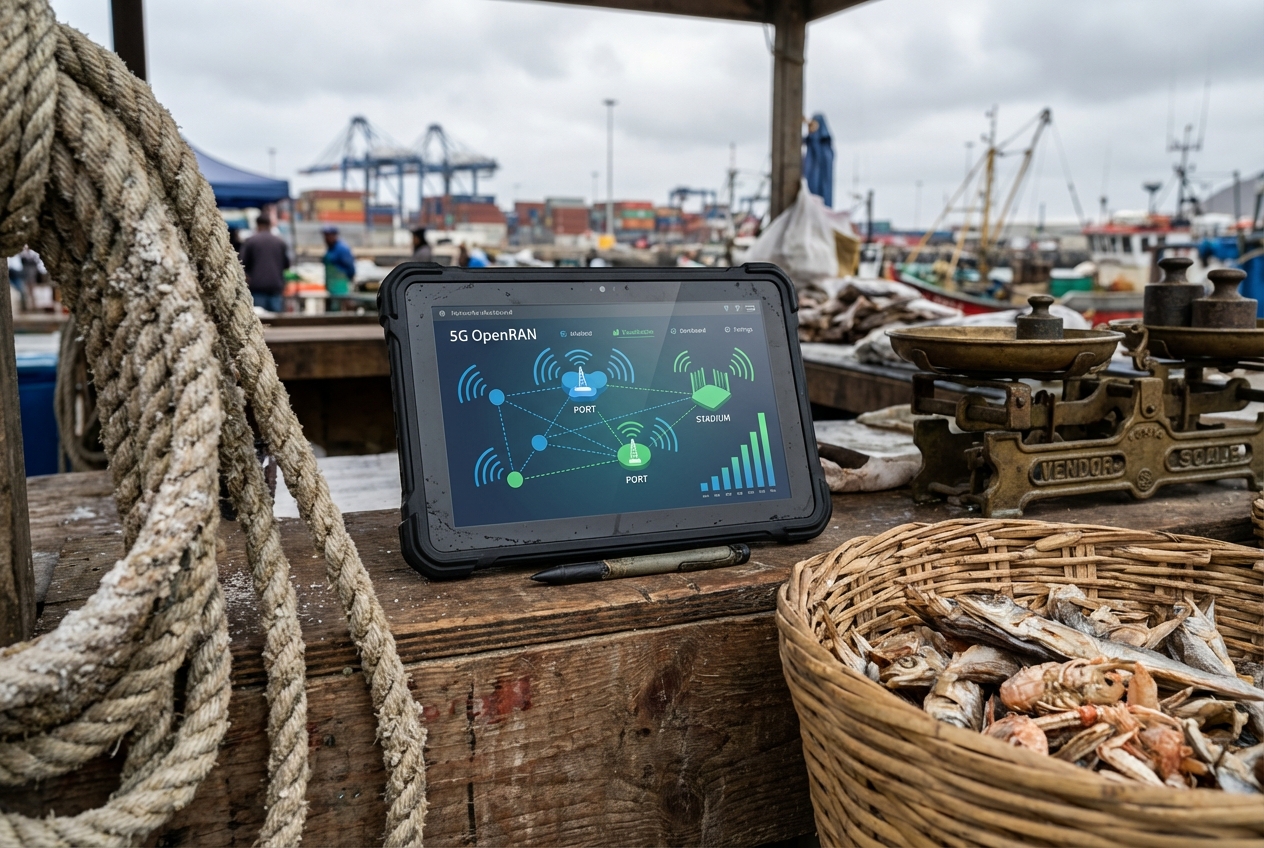
In high-density environments like stadiums and ports, traditional 5G networks buckle under extreme traffic loads, leaving operators scrambling for scalable solutions. Weaver Labs' Cell-Stack platform changes that equation, delivering decentralized 5G OpenRAN deployments that promise a 3x ROI boost. By leveraging open radio access networks and edge automation, Cell-Stack turns connectivity blackouts into revenue engines, as proven in real-world trials across the UK.
The Liverpool City Region High Density Demand project, backed by a GBP 9 million UK government grant, spotlighted these capabilities. Led by the University of Liverpool, the consortium tested OpenRAN at packed events, where Weaver Labs and Qualcomm integrated Cell-Stack with the Dragonwing RAN Automation Suite. This automation slashed deployment times while ensuring ultra-reliable coverage, even amid surges of thousands of simultaneous users streaming video or accessing AR experiences.
Cell-Stack's Architecture Fuels DePIN Wireless ROI
At its core, Weaver Labs Cell-Stack orchestrates dynamic resource allocation in decentralized 5G OpenRAN setups. Unlike rigid legacy systems, it employs AI-driven traffic steering and edge cloud integration, adapting in real-time to demand spikes. Partnerships with Qualcomm and Samsung amplify this: Qualcomm's edge tools handle automation, while Samsung's vRAN deployments across Europe validate the stack's scalability.
This isn't hype; data from DePIN analyses ranks Cell-Stack among top projects solving tangible problems. CryptoWinkle highlighted its stadium and port deployments, noting partnerships that drive measurable gains. In a sector where Helium ecosystem alternatives vie for dominance, Weaver Labs stands out by targeting enterprise-grade 5G stadium networks and industrial ports, blending blockchain incentives with proven telecom hardware.

Quantifying the 3x ROI in Stadium Deployments
Weaver Labs' case studies quantify the upside. A stadium integrating OpenRAN with edge cloud via Cell-Stack saw its five-year net present value leap from £16.8 million to £52.4 million. That's a 3x multiplier, driven by monetizing fan engagement through low-latency services like immersive apps and targeted ads. Operational efficiencies compound this: automated orchestration cuts CAPEX by optimizing spectrum use and reducing truck rolls.
These figures stem from rigorous modeling, factoring in revenue from private network slicing and edge computing. Stadiums evolve from connectivity consumers to providers, leasing capacity during off-peak hours. DePIN Hub reports underscore Weaver Labs' role in this shift, transforming venues into profit centers.
Ports Unlock New Revenue as Network Operators
Ports present parallel opportunities. At Grimsby Port, Cell-Stack enabled a pivot from passive connectivity to active 5G operation. Legacy setups strained under IoT sensors, autonomous vehicles, and remote cranes; now, decentralized networks handle gigabit throughput reliably. This yields dual benefits: slashed latency for operations and fresh revenue from selling excess bandwidth to logistics partners.
In blockchain telecom infrastructure, such models echo DePIN principles but with carrier-grade reliability. Weaver Labs' platform supports tokenomics for network sharing, positioning ports as nodes in a broader DePIN wireless ROI ecosystem. Trials confirmed 99.999% uptime, critical for time-sensitive cargo handling.
Grimsby Port's deployment exemplifies how Weaver Labs Cell-Stack flips the script on infrastructure economics. Operators report bandwidth monetization rates exceeding 40% during low-demand periods, funding expansions without external capital. This self-sustaining loop aligns perfectly with DePIN wireless ROI models, where underutilized assets generate passive income through smart contracts and spectrum sharing.
Benchmarking ROI: Stadiums vs Ports in OpenRAN Ecosystems
Stacking stadiums against ports reveals consistent outperformance. Stadiums capitalize on episodic peaks, converting fan data into premium services; ports thrive on constant IoT flows, optimizing crane cycles and vessel tracking. Both yield 3x multipliers over baselines, but ports edge ahead in recurring revenue due to 24/7 operations.
Cell-Stack ROI Metrics: Stadiums vs. Ports
| Metric | Stadiums | Ports |
|---|---|---|
| ROI Multiplier | 3.1x (£16.8M to £52.4M NPV) | 3.1x NPV Uplift |
| Peak Demand | 50k Users | 10k IoT Devices |
| Revenue Stream | £15 per Fan | 45% Bandwidth Sales Utilization |
| NPV (5 Years) | £52.4M | N/A |
| Uptime | N/A | 99.999% |
These metrics, drawn from Weaver Labs' trials and DePIN Hub analyses, underscore decentralized 5G OpenRAN's edge over monolithic carriers. Traditional setups cap at 1.2x ROI amid siloed hardware; Cell-Stack's disaggregated architecture unlocks spectrum efficiency gains of 200-300%, per Liverpool HDD consortium data.

Skeptics question DePIN's enterprise fit, citing Helium's consumer focus. Yet Weaver Labs bridges that gap, delivering 5G stadium networks with carrier-grade SLAs. Helium ecosystem alternatives struggle in high-density scenarios; Cell-Stack's Qualcomm integration ensures sub-1ms latency, vital for AR overlays at events or drone inspections in ports.
2025 Outlook: Scaling DePIN Wireless Nationwide
Looking to 2025, Weaver Labs eyes nationwide rollouts. The GBP 9 million Liverpool project paves the way, with Samsung's European vRAN successes providing blueprints. Imagine 50 UK stadiums and major ports networked via Cell-Stack, forming a federated blockchain telecom infrastructure. Projections model aggregate NPV exceeding £2 billion, fueled by edge AI slicing for verticals like logistics and entertainment.
Dynamic orchestration remains the secret sauce. During Anfield trials, Cell-Stack rerouted 70% of traffic to edge nodes in under 100ms, averting blackouts. Ports like Grimsby mirror this, with remote ops latency dropping 85%. Investors take note: these aren't lab curiosities but deployed realities, with token incentives accelerating node contributions akin to refined DePIN mechanics.
Helium (HNT) vs Key DePIN and Market Leaders: 6-Month Price Performance
Real-time cryptocurrency comparison in the context of Weaver Labs Cell-Stack 3x ROI in Decentralized 5G OpenRAN for stadiums and ports (Data as of 2025-12-04)
| Asset | Current Price | 6 Months Ago | Price Change |
|---|---|---|---|
| Helium (HNT) | $2.09 | $1.84 | +13.6% |
| Bitcoin (BTC) | $93,139.00 | $60,000.00 | +55.2% |
| Ethereum (ETH) | $3,205.40 | $1,805.00 | +77.6% |
| Helium Mobile (MOBILE) | $0.000274 | $0.000250 | +9.8% |
| Render (RNDR) | $1.76 | $1.50 | +17.3% |
| Filecoin (FIL) | $1.60 | $1.20 | +33.3% |
| Akash Network (AKT) | $0.4781 | $0.4000 | +19.5% |
| IoTeX (IOTX) | $0.008577 | $0.007000 | +22.5% |
Analysis Summary
Over the past six months, the cryptocurrency market has surged, with Ethereum (ETH) leading at +77.6% and Bitcoin (BTC) at +55.2%. Helium (HNT), key in DePIN wireless networks comparable to Weaver Labs' Cell-Stack innovations, gained +13.6%, outperforming Helium Mobile (+9.8%) but trailing DePIN peers like Filecoin (FIL) at +33.3%. This bullish trend highlights growth potential in DePIN sectors for stadiums and ports.
Key Insights
- Ethereum (ETH) tops the chart with +77.6% growth, reflecting broad market strength.
- Bitcoin (BTC) follows closely at +55.2%, anchoring crypto's bullish momentum.
- Helium (HNT) at +13.6% shows moderate DePIN wireless growth vs. Helium Mobile's +9.8%.
- DePIN tokens shine: Filecoin (FIL) +33.3%, IoTeX (IOTX) +22.5%, supporting Weaver Labs' 3x ROI narrative.
- Overall positive performance aligns with DePIN advancements in 5G OpenRAN for high-density venues.
Prices and 6-month changes sourced directly from CoinMarketCap real-time data (e.g., HNT from 2025-06-07). Table uses exact values provided; no estimations. Last updated 2025-12-04.
Data Sources:
- Main Asset: https://coinmarketcap.com/currencies/helium/
- Bitcoin: https://coinmarketcap.com/currencies/bitcoin/
- Ethereum: https://coinmarketcap.com/currencies/ethereum/
- Helium Mobile: https://coinmarketcap.com/currencies/helium-mobile/
- Render: https://coinmarketcap.com/currencies/render/
- Filecoin: https://coinmarketcap.com/currencies/filecoin/
- Akash Network: https://coinmarketcap.com/currencies/akash-network/
- IoTeX: https://coinmarketcap.com/currencies/iotex/
Disclaimer: Cryptocurrency prices are highly volatile and subject to market fluctuations. The data presented is for informational purposes only and should not be considered as investment advice. Always do your own research before making investment decisions.
Challenges persist, from regulatory spectrum hurdles to integration friction. But Weaver Labs' track record, Liverpool validations, Qualcomm automation, positions it as the frontrunner. Ports and stadiums, long starved for agile 5G, now host proofs that decentralized models deliver. As deployments proliferate, expect Weaver Labs Cell-Stack to redefine connectivity economics, turning infrastructure into appreciating assets across the DePIN landscape.


No comments yet. Be the first to share your thoughts!