
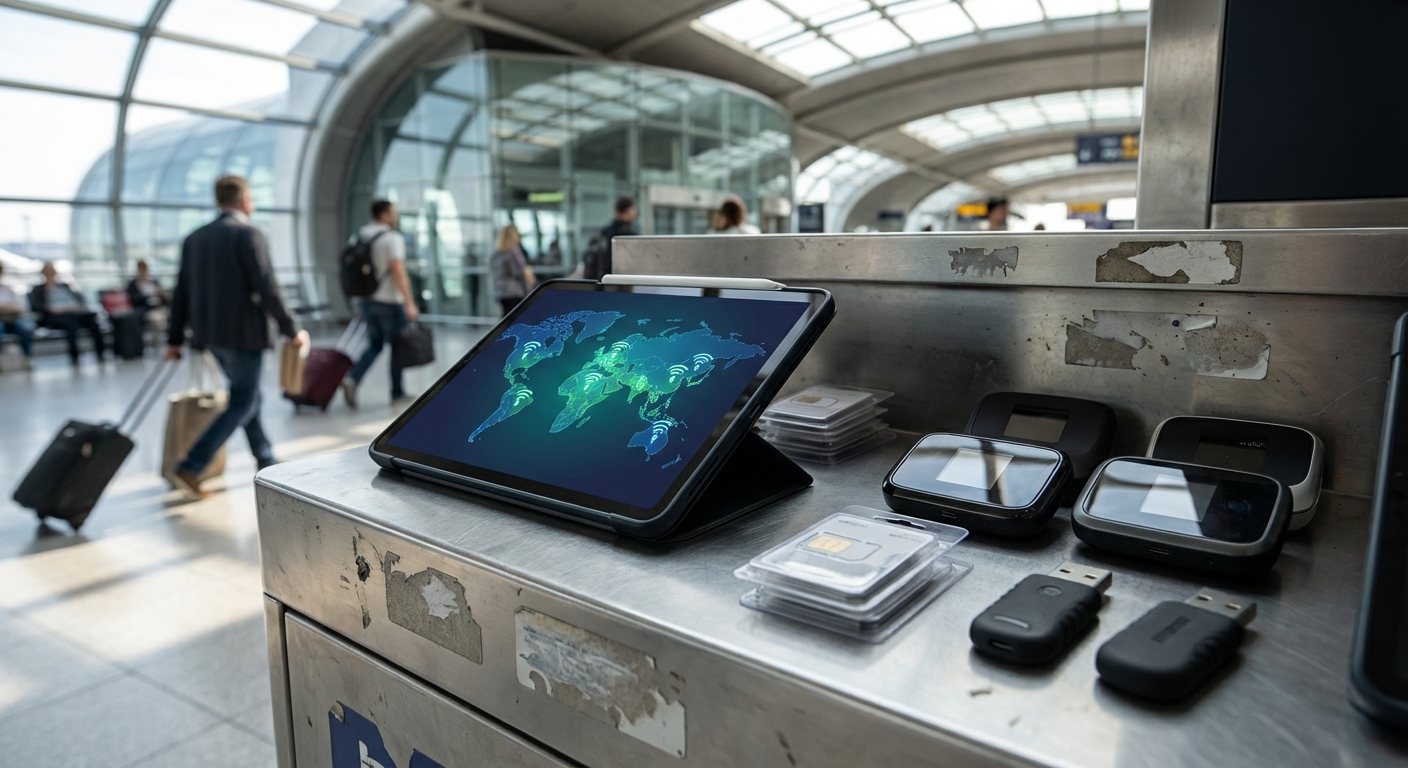
As travelers rush through the bustling terminals of Los Angeles International Airport (LAX), the demand for reliable, high-speed connectivity has never been more critical. In 2025, Helium hotspots at LAX are emerging as a game-changer, delivering decentralized 5G coverage for airports through community-driven infrastructure. With Helium's network now boasting over 93,500 hotspots nationwide, including strategic deployments in high-traffic zones like LAX, passengers and operators alike stand to benefit from seamless Wi-Fi and 5G access powered by blockchain incentives.
This expansion aligns with Helium's Helium Mobile LAX deployment strategy, where 'Boosted Locations' in Los Angeles prioritize areas like airports to maximize coverage and rewards for hotspot operators. As HNT trades at $2.19, up 0.92% in the last 24 hours, the token's stability reflects growing confidence in DePIN's role in wireless infrastructure. Airports, handling millions of devices daily from passenger smartphones to IoT sensors in cargo operations, represent prime territory for such networks.
Boosted Locations Target LAX for Peak Performance
Helium's Boosted Locations initiative is methodically rolling out across Los Angeles, with LAX at the epicenter. By incentivizing deployments in hexes around the airport, Helium addresses coverage gaps where traditional carriers struggle amid dense urban interference and massive user loads. Businesses and individuals deploying Helium Mobile hotspots in these zones earn enhanced rewards, fostering a self-sustaining ecosystem. This approach mirrors successful pilots at over 1,300 business sites nationwide, proving that DePIN airport coverage can scale without massive capex from incumbents.

Consider Lufthansa's private 5G network at LAX's cargo facility, which slashed processing times by 60%. Helium builds on this by offering open, decentralized alternatives that integrate with existing millimeter-wave setups, ensuring future-proof bandwidth for everything from AR passenger apps to real-time baggage tracking.
AT and T Integration Unlocks Carrier-Grade Reliability
A pivotal partnership with AT and T has supercharged Helium's reach, allowing subscribers to tap into the community-built Wi-Fi network at thousands of locations, including airport vicinities. This collaboration, announced via Business Wire, enhances mobile service without users needing to share credentials, directly boosting signal quality for major carriers. At LAX, where 5G hotspots are key to supporting high-bandwidth demands, such integrations position Helium as the backbone for converged 5G and Wi-Fi 7 networks reshaping airport operations.
Operators benefit too: Helium hotspots improve signals for integrated carriers, turning local businesses into quiet powerhouses of connectivity. With over 93,500 hotspots live, the network's density around LAX promises low-latency experiences critical for aviation's helium 5G aviation 2025 ambitions.
FreedomFi Acquisition Fuels 5G Innovation
The 2022 acquisition of FreedomFi marked Helium's bold pivot to decentralized 5G, arming the network with open-source tools for rapid deployments. Today, this translates to helium lax hotspots capable of powering IoT alongside mobile broadband, distinct from legacy LoRaWAN setups. As airports eye five key 5G focus areas in 2025 - from passenger services to enterprise automation - Helium's model offers disciplined scalability, blending incentives with proven tech.
Helium (HNT) Price Prediction 2025-2031
Forecasts driven by LAX hotspot expansions, AT&T partnerships, 5G DePIN growth, and 2025 halving
| Year | Minimum Price | Average Price | Maximum Price | Key Insights |
|---|---|---|---|---|
| 2025 | $2.50 | $3.50 | $4.80 | LAX deployments & AT&T Wi-Fi integration; +60% avg growth from current $2.19 |
| 2026 | $3.50 | $5.20 | $8.50 | Global DePIN scaling & boosted locations; +49% YoY avg |
| 2027 | $4.50 | $7.50 | $12.50 | Halving effects & 5G hotspot surge; +44% YoY avg |
| 2028 | $6.00 | $10.00 | $17.00 | Enterprise adoption in airports/businesses; +33% YoY avg |
| 2029 | $8.00 | $13.50 | $22.00 | Regulatory clarity & IoT expansion; +35% YoY avg |
| 2030 | $10.50 | $17.50 | $28.00 | Mature DePIN ecosystem dominance; +30% YoY avg |
| 2031 | $13.00 | $22.00 | $36.00 | Long-term wireless leadership; +26% YoY avg from 2030 |
Price Prediction Summary
Helium (HNT) shows strong upside potential from $3.50 average in 2025 to $22.00 by 2031, fueled by real-world utility in decentralized 5G/Wi-Fi at key sites like LAX, carrier partnerships, and halving-induced scarcity. Bullish max reflects mass adoption; mins account for market cycles and competition.
Key Factors Affecting Helium Price
- LAX & airport hotspot deployments enhancing high-traffic coverage
- AT&T integration for 93,500+ US hotspots
- Helium Halving 2025 reducing HNT emissions
- Boosted Locations & Mexico expansion to 2,000+ cities
- DePIN growth in 5G/IoT with FreedomFi acquisition
- Partnerships improving carrier offload and service quality
- Market cycles favoring utility tokens amid bull trends
Disclaimer: Cryptocurrency price predictions are speculative and based on current market analysis. Actual prices may vary significantly due to market volatility, regulatory changes, and other factors. Always do your own research before making investment decisions.
Yet, discipline tempers enthusiasm. Hotspot operators must navigate the upcoming Helium Halving in 2025, which will recalibrate rewards but ultimately strengthen network economics for long-term holders. At $2.19, HNT's positioning invites strategic accumulation amid these airport-focused catalysts. For more on helium's airport strategies, explore helium network at airports.
Hotspot operators eyeing LAX deployments should weigh these shifts strategically. The halving, akin to Bitcoin's supply dynamics, will halve block rewards, pressuring short-term yields but rewarding density in high-value areas like airports. With HNT at $2.19, up 0.92% over 24 hours, early movers in Boosted Locations stand to capture premium hex rewards before saturation. Local businesses, from terminal cafes to cargo handlers, can deploy Helium Mobile hotspots - Wi-Fi/5G units distinct from IoT LoRaWAN - to boost customer signals for AT and T users without credential sharing.
Strategic Deployment Tactics for Airport Operators
Success at LAX hinges on precise placement. Helium's deployment guide emphasizes indoor/outdoor units with clear line-of-sight to passenger flows and cargo zones. Picture a hotspot in Terminal 4's lounge, seamlessly offloading data from congested carrier towers, or cargo bays where Lufthansa's private 5G cut processing by 60%. Helium amplifies this with decentralized incentives, turning operators into stakeholders. As DePIN airport coverage matures, expect integrations with Wi-Fi 7 for ultra-low latency AR guides and drone inspections.
Yet, challenges persist: regulatory hurdles for aviation spectrum and interference from millimeter-wave density demand disciplined setups. Helium's FreedomFi toolkit mitigates this, enabling CBRS-compliant 5G radios that scale without telco gatekeepers. In Mexico, similar expansions to 2,000 cities via Movistar validate the model, hinting at U. S. airport rollouts beyond LAX.
Economic Incentives and Risk-Adjusted Returns
For portfolio managers, HNT's $2.19 perch signals undervaluation amid network growth. Over 93,500 U. S. hotspots, with LAX-focused boosts, project 20-30% uptime rewards uplift in prime hexes. Operators report steady HNT accrual, bolstered by carrier offload fees post-AT and T tie-up. Compare this to centralized 5G capex black holes; DePIN flips the script, crowdsourcing infrastructure for shared upside.
| Metric | LAX Boosted Hex | Standard Hex |
|---|---|---|
| Daily Rewards (HNT) | 0.15-0.25 🚀 | 0.05-0.10 📈 |
| User Traffic Boost | and 40% from travelers ✈️ | Baseline 📱 |
| ROI Timeline (at $2.19) | 6-12 months 💰 | 18-24 months ⏳ |
This table underscores why helium mobile LAX deployment attracts pros: accelerated payback in a $2.19 HNT environment. Discipline means vetting hardware like Nova Labs units for reliability, avoiding oversaturated spots.
Airports represent DePIN's killer app, converging passenger delight with enterprise muscle. From real-time flight updates to autonomous tugs, decentralized 5G airports via Helium pave efficient paths. As 2025 unfolds, with halving catalysts and carrier synergies, savvy investors balance holdings accordingly. For deeper dives into related IoT synergies, check Helium 5G hotspots powering decentralized IoT.
Operators at LAX aren't just hosting signals; they're staking claims in aviation's wireless frontier. With HNT steady at $2.19, the runway for helium 5G aviation 2025 looks clear, rewarding those who deploy with foresight.




No comments yet. Be the first to share your thoughts!