The depin wireless 2026 limits to account for
Decentralized Physical Infrastructure Networks (DePIN) aim to replace traditional ISP monopolies with community-owned wireless mesh networks. For 2026, the primary hurdle isn’t technology—it’s the constraint of physical reality. Unlike software, you cannot scale a DePIN wireless network by simply deploying code. You must deploy hardware, secure real estate, and manage local power grids.
The central tension lies in the cost of deployment versus the revenue generated by local connectivity. In dense urban areas, the density of users justifies the hardware investment. In rural zones, the high cost of long-range antennas and backhaul often outweighs the potential subscriber base. This economic imbalance creates a "last mile" gap that pure crypto incentives struggle to fill without significant capital expenditure.
To navigate this, successful 2026 projects prioritize hybrid models. They combine decentralized node operators with centralized backhaul agreements. This approach reduces the burden on individual users while maintaining the decentralized ethos. The most viable networks will be those that solve the physical logistics of connectivity, not just the tokenomics of reward distribution.
Depin wireless 2026 choices that change the plan
Choosing a DePIN wireless network in 2026 requires weighing immediate hardware costs against long-term coverage density. The market is no longer dominated by a single standard; instead, 5G-Advanced mesh networks present distinct operational models. Each project balances token incentives, hardware accessibility, and backhaul reliability differently. Understanding these tradeoffs prevents overpaying for hardware that lacks sufficient network density to generate meaningful rewards.
The following comparison breaks down the most prominent DePIN wireless projects expected to be released or significantly upgraded in 2026. These selections prioritize networks with active physical infrastructure rather than theoretical roadmaps.
Helium Mobile remains the most accessible entry point for consumer wireless, leveraging a mature LoRaWAN foundation that has recently integrated 5G LTE capabilities. Its primary advantage is the existing density of hotspots in major metropolitan areas, which reduces the time required for new nodes to start earning rewards. However, the reliance on community-deployed hardware means coverage gaps persist in suburban and rural zones. Users must accept that coverage is not yet uniform, making it a speculative play on urban adoption rather than a guaranteed utility replacement.
Orochi Network introduces a more rigorous verification layer through its Proof-of-Service model. This approach demands higher-quality hardware and stricter uptime requirements, resulting in more reliable data integrity for enterprise clients. The tradeoff is a higher barrier to entry; the hardware costs are significantly steeper, and the reward structure is less about volume and more about verified service quality. This model appeals to investors seeking stability over the high-variance rewards typical of crowd-sourced networks.
Tangem Wireless targets the private 5G small cell market, focusing on enterprise and industrial use cases rather than general consumer mobile coverage. Its hardware is expensive and designed for controlled environments, offering predictable yields through fixed staking mechanisms rather than variable network usage fees. This approach minimizes the risk of reward inflation but limits the total addressable market to businesses willing to pay for private, secure connectivity solutions.
When evaluating these options, consider your risk tolerance and geographic location. If you live in a dense urban area, Helium Mobile offers the fastest path to participation with lower upfront costs. For those prioritizing data integrity and enterprise-grade reliability, Orochi’s verification model provides a more robust, albeit expensive, alternative. Tangem Wireless is best suited for investors with a specific interest in private 5G infrastructure and stable, low-volatility yield generation.
How to Choose the Right DePIN Project for 2026
The DePIN space is shifting from speculative hype to infrastructure utility. With 5G-Advanced mesh networks becoming the backbone for many new projects, picking a winner requires looking past tokenomics and focusing on network integrity. The most viable projects in 2026 are those that can prove their physical assets are actually working.
Use this five-step framework to evaluate any DePIN project before committing capital or hardware.
The biggest risk in DePIN is "ghost nodes"—devices that exist on paper but aren't providing real service. Look for projects using Orochi Network or similar zero-knowledge proof systems. These mechanisms cryptographically verify that a node is actually transmitting data or hosting compute power, not just sitting idle. If a project relies solely on self-reported uptime without third-party verification, skip it.
As we move into 2026, legacy 4G-only mesh networks are becoming obsolete. The best DePIN projects are integrating 5G-Advanced capabilities, allowing for lower latency and higher bandwidth density. Ensure the hardware you buy is future-proof and can connect to emerging 5G-A infrastructure. Projects stuck on older protocols will struggle to compete with ISP-grade performance.
A token should be necessary for network operation, not just a reward for participation. Look for models where users must stake or spend tokens to access network resources, creating a natural deflationary pressure. Avoid projects where the only utility is selling rewards; those models collapse when token prices drop. The token should be the fuel, not the exhaust.
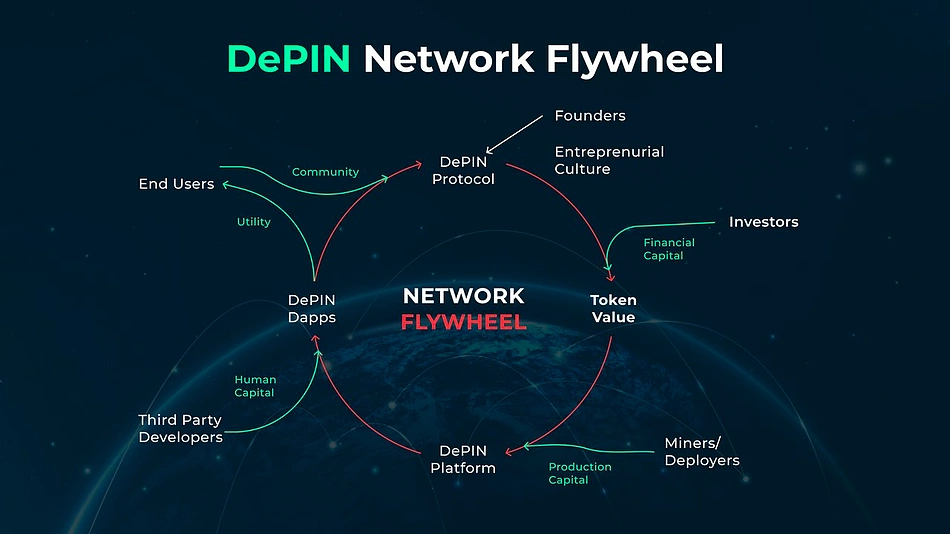
Separate the project's crypto revenue from its actual business revenue. The strongest DePIN networks generate fiat income by selling excess bandwidth or compute to enterprises and ISPs. If a project's only revenue source is token inflation, it is not a sustainable infrastructure business. Look for partnerships with traditional telecoms or cloud providers that indicate real-world demand.
DePIN is a hardware-intensive game; it requires constant updates to driver firmware and network protocols. Check GitHub commit frequency and Discord/Twitter engagement. A silent developer team often signals a abandoned project. Prioritize networks with active builder ecosystems that are building tools on top of the protocol, not just farming rewards.
Common DePIN Wireless Mistakes to Avoid in 2026
The hype around 5G-Advanced mesh networks often obscures practical realities. Many DePIN wireless projects promise global coverage but fail to address the physical constraints of spectrum licensing and hardware deployment. Before committing capital or resources, scrutinize three critical areas where projects frequently mislead investors.
Vague Proof-of-Service Data
DePIN relies on verifiable physical infrastructure, yet many projects offer opaque metrics. A network claiming "high uptime" without public, on-chain validation of node performance is a red flag. Look for projects that publish raw telemetry data rather than curated summaries. If you cannot audit the signal strength or latency from a specific node location, the network's reliability is unproven.
Ignoring Spectrum and Regulatory Hurdles
Wireless DePIN operates within strict legal frameworks. Projects that gloss over local spectrum regulations or assume universal regulatory approval are setting themselves up for failure. 2026 will see tighter enforcement in major markets like the US and EU. Verify that the project has secured necessary licenses or partners with licensed carriers. Without legal clarity, your nodes could be shut down overnight.
Overreliance on Incentives Without Utility
Many DePIN models collapse when token incentives dry up because they lack genuine utility. A network that only exists to distribute tokens, rather than providing a service consumers actually need, is unsustainable. Evaluate the demand for the underlying service—whether it’s wireless coverage, compute power, or storage. If the service has no market fit, the token price will follow, regardless of marketing claims.
Depin wireless 2026: what to check next
Here are the most common questions about decentralized physical infrastructure networks and their role in the 2026 wireless landscape.
No comments yet. Be the first to share your thoughts!