
DePIN wireless 2026 market snapshot
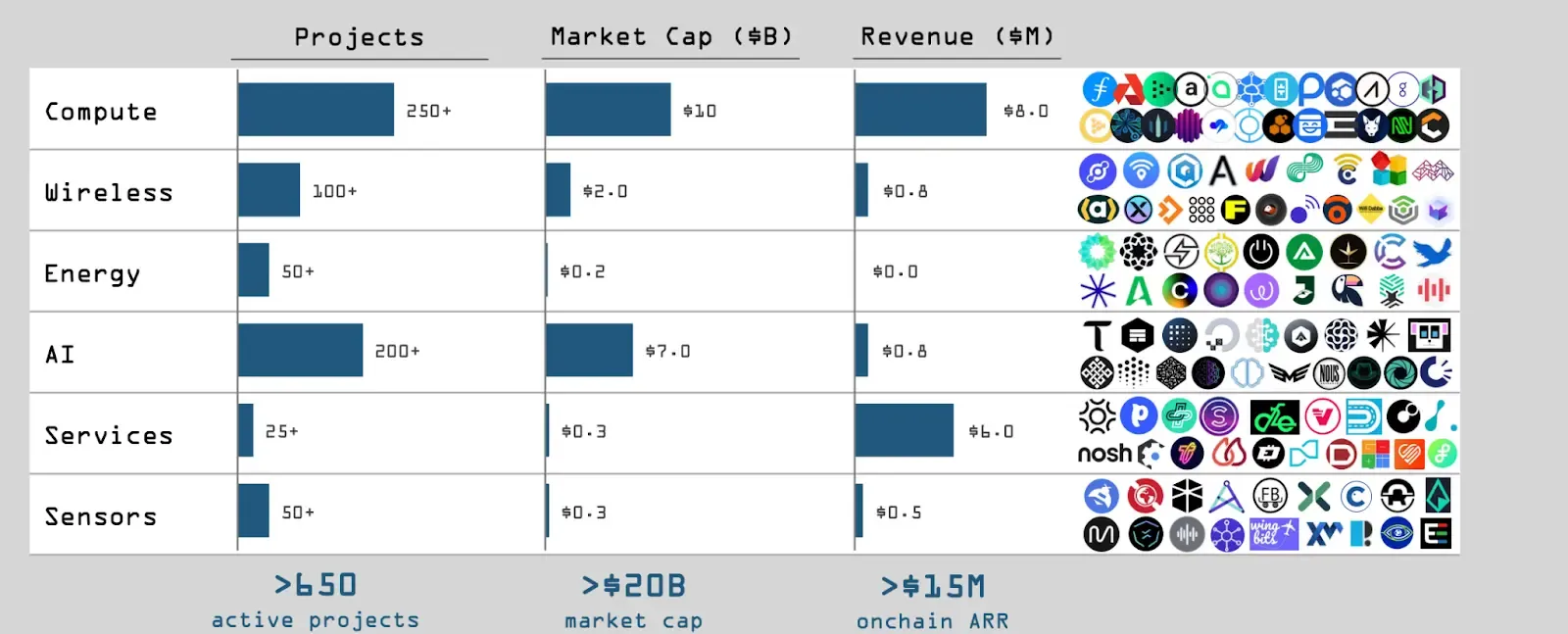
The narrative around DePIN wireless 2026 has shifted from speculative hype to tangible infrastructure. Early 2024 saw DePIN primarily discussed as a novel tokenomics experiment, but by January 2026, the sector demonstrated sustained economic viability. Leading DePIN networks collectively generated approximately $150 million in on-chain revenue, signaling a transition toward utility-driven growth rather than pure speculation [1].
This revenue generation is driven by real-world demand. AI applications require massive GPU computing power, while consumer apps need decentralized storage and bandwidth. DePIN networks are uniquely positioned to supply these resources by leveraging distributed hardware owned by individuals and small businesses. This model reduces the capital expenditure required to build traditional centralized infrastructure, making it an attractive option for scaling connectivity in underserved areas.
Market momentum is visible in the performance of key assets. The following chart illustrates the recent price action of Helium (HNT), a leading DePIN wireless token, reflecting investor sentiment and network adoption trends.
While revenue figures are promising, the market remains volatile. Investors are closely monitoring whether on-chain revenue can sustainably support token valuations beyond short-term speculative cycles. The focus for 2026 is on networks that can prove consistent uptime, low latency, and genuine user demand for their wireless services.
Helium Mobile and the IoT backbone
Helium has evolved from a niche IoT coverage map into a dual-purpose DePIN wireless 2026 infrastructure. By leveraging the same physical gateways for both machine-to-machine data and cellular voice, Helium Mobile offers a cost-effective alternative to traditional carriers in rural and underserved areas. This hybrid approach addresses the economic inefficiency of building separate networks for IoT and consumer mobile.
The network relies on a decentralized fleet of hotspot operators who provide coverage in exchange for HNT token rewards. This model allows for rapid expansion without the capital expenditure typical of telecom giants. For users, it means affordable unlimited data plans backed by a growing physical footprint. The tokenomics align the incentives of network builders with consumer adoption, creating a self-sustaining ecosystem.
Helium Mobile is not just a consumer product; it is the visible layer of a broader IoT backbone. The same spectrum and hardware that carry phone calls also support low-power sensors for agriculture, logistics, and environmental monitoring. This shared infrastructure maximizes the utility of every deployed unit, ensuring that rural connectivity serves both human and machine needs.
The economic viability of this model is reflected in the performance of the HNT token. As network usage grows, demand for the underlying asset increases, providing a tangible metric for the project's health.
Community-owned broadband alternatives
While Helium dominates headlines, other decentralized physical infrastructure networks (DePIN) are carving out specific niches in rural connectivity. These projects often prioritize different technical approaches, ranging from LoRaWAN sensor networks to high-throughput Wi-Fi mesh solutions. Understanding these variations helps investors and community organizers choose the right architecture for their geographic and economic constraints.
The landscape of DePIN wireless 2026 is defined by specialization. Projects like Titan Network focus on high-bandwidth backhaul, while others like Meshtastic or local mesh initiatives prioritize low-power, long-range communication for essential data. This fragmentation allows for more resilient, community-owned broadband alternatives that do not rely on a single monolithic protocol.
The table below compares key metrics for prominent DePIN projects, highlighting their coverage type, tokenomics model, and specific rural focus areas.
| Project | Coverage Type | Tokenomics Model | Rural Focus |
|---|---|---|---|
| Helium | LoRaWAN & 5G | Proof-of-Coverage (PoC) | IoT Sensors & Mobile Hotspots |
| Titan Network | Wi-Fi 6 Mesh | Proof-of-Capacity | High-Bandwidth Backhaul |
| Meshtastic | LoRa Mesh | Open Source (No Token) | Low-Power Text Messaging |
| Nebra | LoRaWAN | Hardware Sales | Enterprise IoT Gateways |
Helium remains the largest network by node count, leveraging Proof-of-Coverage to incentivize hotspot deployment. However, its reliance on mobile hotspots can be costly for rural providers. Titan Network offers a compelling alternative for areas needing robust Wi-Fi 6 coverage, using Proof-of-Capacity to ensure data integrity. For communities requiring only basic telemetry or emergency communication, open-source solutions like Meshtastic provide a zero-token, hardware-centric approach.
Choosing the right project depends on whether the goal is consumer-grade internet access or specialized IoT data collection. Each model presents distinct trade-offs between infrastructure cost, technical complexity, and community governance structure.
How token incentives drive rural deployment
Traditional ISPs often view rural areas as economically unviable due to high infrastructure costs and low population density. DePIN wireless 2026 networks solve this by using crypto tokenomics to bootstrap physical infrastructure. Instead of waiting for centralized capital expenditure, these projects incentivize individuals and local businesses to deploy hardware. The token acts as both a reward for providing coverage and a currency for accessing it, creating a self-sustaining economic loop where the network grows as more users participate.
This model shifts the risk from a single provider to a distributed community of node operators. When a resident installs a wireless hotspot, they are not just getting internet; they are becoming a micro-infrastructure provider. The network compensates them with tokens based on the quality and quantity of data relayed. This aligns financial incentives with physical expansion, allowing coverage to spread organically into areas that legacy telecoms ignore.
The economic viability of this approach is evident in recent market performance. By early 2026, leading DePIN networks collectively generated roughly $150 million in on-chain revenue, demonstrating that decentralized hardware networks can sustain significant commercial activity. This revenue stream helps fund further expansion without relying on external venture capital or government subsidies alone.
The token also serves as a governance mechanism. Operators can vote on network upgrades, fee structures, and expansion priorities. This decentralized governance ensures that the network evolves according to the needs of its users rather than a distant corporate headquarters. For rural communities, this means greater control over their digital infrastructure and pricing, fostering a more resilient and locally accountable connectivity ecosystem.
Community Sentiment on Mesh Networks
The gap between theoretical coverage and actual rural connectivity often shows up in user forums before it appears in whitepapers. While DePIN wireless 2026 promises ubiquitous low-latency access, the reality on the ground is heavily dependent on local topography and hardware placement.
Reddit discussions highlight that signal stability varies wildly based on elevation. Users report that placing nodes on ridge lines significantly outperforms valley-floor installations, even when the latter are closer to population centers. This physical constraint forces operators to prioritize geography over simple proximity to users.
DePIN Wireless 2026 FAQ
Is DePIN wireless viable for rural areas?
Decentralized Physical Infrastructure Networks (DePIN) offer a scalable alternative to traditional telecom in underserved regions. By leveraging community-owned hotspots, these networks can extend coverage where incumbent providers find ROI lacking. As the DePIN wireless 2026 landscape matures, this model is proving essential for bridging the digital divide without massive capital expenditure.
What are the main risks of investing in DePIN tokens?
DePIN projects face high volatility and regulatory uncertainty. Revenue models depend on sustained user adoption and hardware deployment, which can be slow. While leading networks generated roughly $150 million in on-chain revenue by early 2026, many smaller projects struggle with tokenomics that do not align with long-term infrastructure maintenance.
How do DePIN wireless projects ensure data integrity?
Most robust networks use Proof-of-Signal or Proof-of-Coverage mechanisms to verify hotspot activity. This prevents "fake" coverage claims and ensures users only pay for actual connectivity. Without these cryptographic verification layers, the network would be vulnerable to Sybil attacks and unreliable service delivery.
Which DePIN projects lead in wireless connectivity?
Helium remains the most established player, with a vast global hotspot network. Newer entrants like Titan Network and Hivemapper are expanding into adjacent physical infrastructure, but for pure wireless mesh, Helium and its subnetworks still hold the largest market share in terms of active coverage and user base.
No comments yet. Be the first to share your thoughts!