DePIN wireless 2026 market snapshot
The decentralized wireless infrastructure sector has moved past the speculative phase of 2023 and 2024, entering a period of tangible expansion in 2026. DePIN (Decentralized Physical Infrastructure Networks) now represents a serious alternative to traditional telecom models, leveraging token incentives to crowdsource the deployment of hotspots and sensors. This shift is not merely theoretical; it is visible in the growing density of coverage maps and the increasing institutional interest in decentralized connectivity protocols.
Helium (HNT) remains the primary benchmark for this market, serving as the leading decentralized wireless network. Its performance reflects the broader health of the DePIN wireless 2026 ecosystem. Investors and analysts are closely watching HNT’s price action as a proxy for network adoption and utility. The token’s movement often correlates with announcements of new hotspot deployments and partnerships with traditional carriers, signaling a maturing infrastructure layer.
The market structure is evolving from pure speculation to utility-driven valuation. As noted by industry observers, the strength of the DePIN sector in 2026 is demonstrated by its expansion beyond wireless into storage, compute, and geospatial data. However, wireless connectivity remains the most visible and consumer-facing segment. The transition from hype to real-world coverage is the defining narrative of this year, with Helium and emerging competitors like Hivemesh vying for dominance in the decentralized connectivity race.
The integration of these decentralized networks into broader crypto markets highlights the need for real-time data. As DePIN projects scale, their financial metrics become increasingly intertwined with the broader cryptocurrency landscape. Understanding the price dynamics of key tokens like HNT is essential for assessing the viability and growth trajectory of the underlying physical infrastructure.
Helium vs Hivemesh network comparison
The race to dominate DePIN wireless 2026 has narrowed to a direct contest between two distinct architectural philosophies. Helium, the incumbent leader, offers a proven, high-density coverage model built on mobile hotspot participation. Hivemesh, a newer entrant, challenges this dominance with a focus on enterprise-grade, high-throughput connectivity using fixed wireless access (FWA) hardware. Understanding the trade-offs between these two protocols is essential for investors and infrastructure providers evaluating long-term yield and network stability.
Helium’s strategy relies on a massive, distributed network of consumer-grade hotspots, creating a "mesh" that excels in urban and suburban density. This model has allowed it to achieve widespread geographic coverage quickly. In contrast, Hivemesh prioritizes reliability and bandwidth over sheer node count, targeting areas where high-speed, consistent connectivity is required rather than just basic presence. This fundamental difference shapes their respective tokenomics and hardware barriers to entry.
The table below breaks down the core metrics that define the current competitive landscape between these two DePIN wireless 2026 leaders.
| Metric | Helium | Hivemesh |
|---|---|---|
| Network Type | Mobile Hotspot Mesh | Fixed Wireless Access |
| Primary Use Case | IoT & Mobile Coverage | High-Speed Home/Enterprise |
| Hardware Barrier | Low (Consumer Devices) | Medium (Specialized FWA) |
| Reward Mechanism | Proof-of-Coverage (PoC) | Data Transfer & Uptime |
| Coverage Focus | Urban Density | Suburban & Rural |
The divergence in hardware requirements significantly impacts the initial investment for participants. Helium’s low barrier allows for rapid scaling and community-driven growth, but it can lead to signal interference in dense areas. Hivemesh’s higher hardware costs act as a filter, ensuring that only serious providers with optimized locations contribute to the network, potentially leading to higher quality service but slower expansion.
For those tracking the financial implications of these network choices, the token performance of both protocols reflects their market positioning. Helium’s established liquidity and broader ecosystem integration often result in higher trading volumes, while Hivemesh’s token exhibits volatility tied to its specific partnership announcements and enterprise adoption rates.
Investors analyzing the DePIN wireless 2026 landscape must weigh the stability of Helium’s established network against the high-growth potential of Hivemesh’s specialized approach. The choice between them often depends on whether the priority is broad, low-cost coverage or high-performance, dedicated connectivity.
How DePIN Wireless Generates Yield in 2026
Operators in the DePIN wireless ecosystem earn rewards by contributing physical infrastructure—such as cellular towers, hotspots, or mesh nodes—to decentralized networks. This model shifts the traditional capital expenditure burden from large telecom incumbents to individual operators and small businesses. In 2026, the yield mechanics for DePIN wireless projects like Helium (HNT) and emerging competitors have matured from speculative mining to structured, data-driven compensation. Rewards are no longer distributed purely by the number of devices online but are tied to verifiable coverage, data throughput, and network demand.
The primary income stream for wireless DePIN operators comes from two sources: coverage rewards and data transfer rewards. Coverage rewards are paid for the act of proving that a device is broadcasting and receiving signals in a specific geographic area. Data transfer rewards are paid when the network routes actual user traffic through the operator’s hardware. This dual-reward structure ensures that operators are incentivized to maintain high-quality, active infrastructure rather than simply sitting on idle hardware. The sustainability of this passive income depends heavily on the network’s ability to attract real-world users who generate the data traffic that pays the operators.
To understand the current yield potential, it is essential to look at the live market valuation of the underlying tokens. The price volatility of tokens like HNT directly impacts the fiat value of the rewards operators receive, even if the token yield remains constant. Below is the current market data for Helium, the dominant player in the DePIN wireless space, which serves as a benchmark for the sector's economic health.
The sustainability of passive income claims in the 2026 market hinges on the balance between network growth and token emission rates. Early in a DePIN network’s lifecycle, emission rates are high to attract infrastructure providers, leading to significant yields. As the network matures, emissions typically decrease while the utility of the token increases through real-world usage. Operators must evaluate whether the projected data traffic growth can offset the dilution from token emissions. A network with strong enterprise contracts and consumer adoption can maintain high yields even with lower emission rates, whereas a network reliant solely on speculative mining will see yields erode as supply outpaces demand.
For investors and operators analyzing the DePIN wireless race, the technical performance of the network is just as critical as the tokenomics. The underlying blockchain infrastructure must handle transaction volume efficiently to ensure rewards are distributed fairly and promptly. Below is a technical chart of Helium’s price action, which reflects market sentiment and the broader crypto cycle’s influence on DePIN valuations.
Ultimately, the DePIN wireless sector in 2026 offers a tangible link between physical infrastructure and digital assets. While the promise of passive income is compelling, it is not without risk. Operators must carefully assess the longevity of the network, the clarity of its reward mechanisms, and the real-world demand for the connectivity they provide. The winners in this race will likely be those who can demonstrate consistent, verifiable value generation rather than those who simply deploy the most hardware.
Infrastructure Challenges and Regulatory Risks
The expansion of DePIN wireless in 2026 faces immediate headwinds from spectrum licensing and regulatory uncertainty. While Helium and Hivemesh have successfully leveraged unlicensed spectrum to build global coverage, they operate in a gray area that traditional telecommunications providers are actively contesting. In the United States, the Federal Communications Commission (FCC) has scrutinized these models, raising questions about interference and the long-term legality of crowdsourced cellular networks. This regulatory friction creates a binary outcome for investors: either these networks are formalized into recognized infrastructure tiers, or they are restricted to niche, low-bandwidth applications.
Technical limitations further complicate the race for dominance in dense urban environments. Unlike centralized carriers with dedicated fiber backbones and high-power towers, DePIN nodes often rely on consumer-grade hardware with limited range and throughput. In high-density areas, signal congestion can degrade performance, making these networks less attractive for data-heavy tasks compared to 5G alternatives. However, for IoT devices and low-power sensors, this "good enough" connectivity is often sufficient, creating a specific niche where DePIN wireless can thrive without directly competing with major ISPs on speed.
The financial implications of these challenges are visible in market volatility. Investors must weigh the potential for massive scale against the risk of regulatory crackdowns or technical obsolescence. The price action of leading DePIN tokens often reflects this tension between rapid user adoption and institutional skepticism.
How to deploy a DePIN wireless node
Entering the DePIN wireless space in 2026 requires treating your node as a critical infrastructure asset rather than a passive investment. Success depends on precise hardware selection, strategic location placement, and rigorous network verification. The following workflow outlines the essential steps to deploy a functional DePIN wireless node that contributes meaningfully to the decentralized internet.
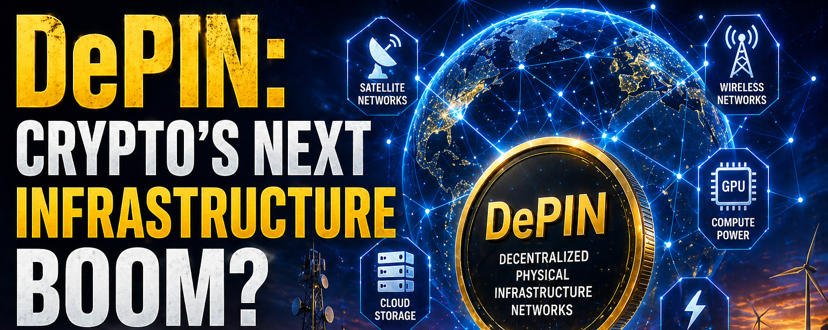
Choose hardware certified for the specific DePIN protocol you intend to join, such as Helium or Hivemesh. Verify that the device supports the required frequency bands (e.g., 900MHz for LoRaWAN or 5GHz for Wi-Fi) and has a proven track record of reliability in the 2026 market. Official documentation from the network provider is the primary source for compatibility lists; avoid uncertified devices to prevent rejection by the network.
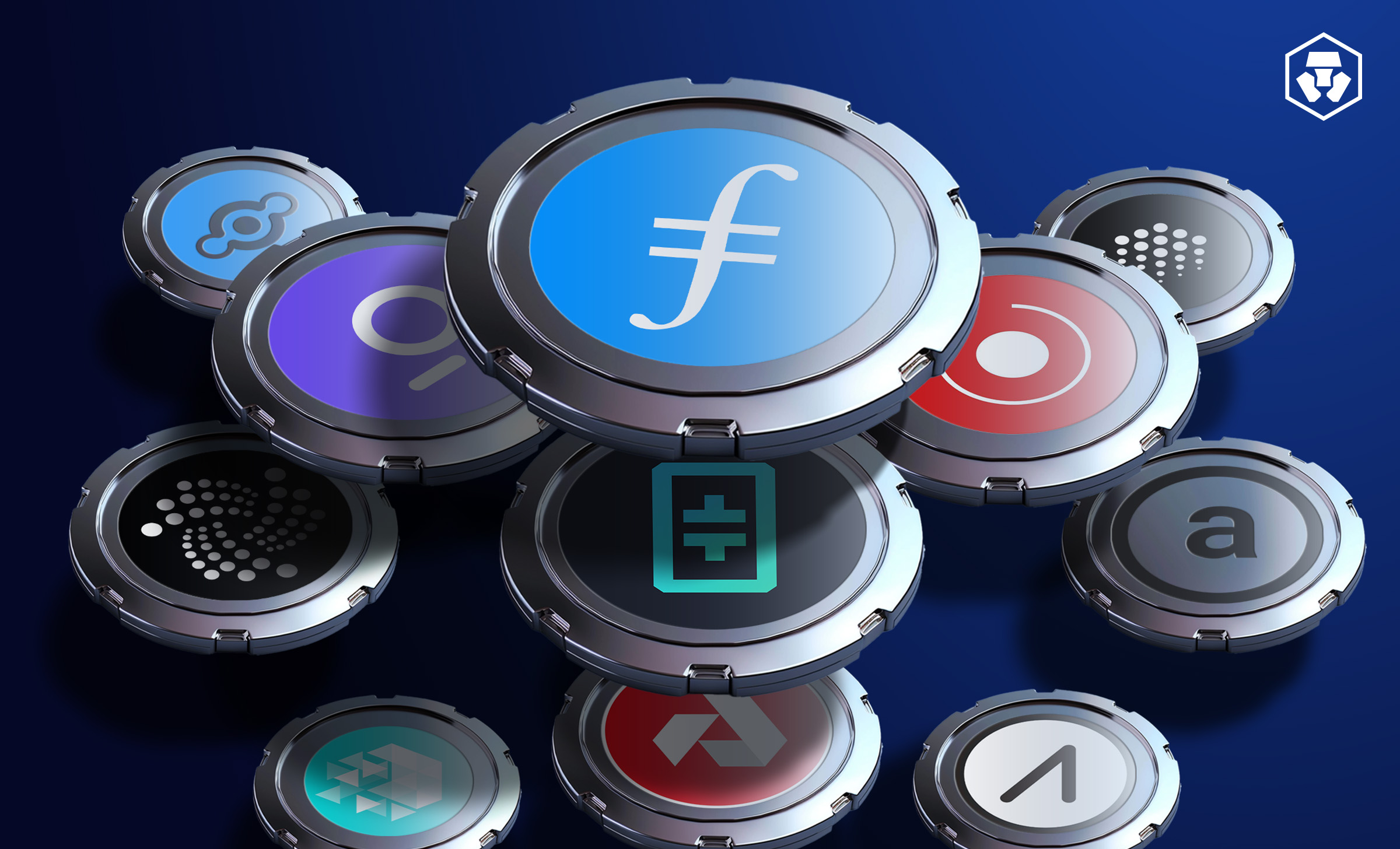
Wireless signal propagation is highly dependent on physical obstructions and elevation. Use official network heatmaps or third-party tools like DePIN Hub to identify zones with low coverage but high potential demand. Ensure your installation site offers a clear line of sight to surrounding nodes and meets the provider’s minimum signal strength requirements for earning rewards.
Connect your device to a stable internet source via Ethernet or high-quality Wi-Fi. Follow the provider’s setup guide to configure the SSID, security protocols, and gateway settings. Most modern DePIN routers include a companion app that simplifies this process, but ensure your network configuration does not block the necessary ports for peer-to-peer communication.
Once powered on, monitor the device’s status through the network’s explorer or dashboard. Confirm that your node is actively transmitting and receiving data packets. Check that your wallet address is correctly linked and that you are receiving token rewards in your expected denomination. Initial verification may take 24-48 hours as the network syncs your node’s presence.
Regularly review your node’s uptime, data transfer volume, and reward consistency. Use the network’s official analytics tools to identify periods of low activity or signal interference. Adjust antenna placement or internet connectivity if performance drops below the network’s baseline thresholds. Consistent performance is key to maintaining your position in the reward distribution algorithm.
To understand the broader market context of your investment, track the performance of the native token associated with your chosen DePIN network.
Technical analysis of the token’s price action can help you gauge market sentiment and potential volatility. Use provider-backed charts to identify support and resistance levels.
Frequently asked questions about DePIN wireless
How to invest in DePIN wireless?
Investing in DePIN wireless requires purchasing the native tokens of active networks like Helium (HNT) or Hivemesh (HIVE) on major cryptocurrency exchanges. These tokens represent both governance rights and access to the underlying infrastructure. Investors typically acquire these assets to stake them for rewards or to trade based on network adoption metrics. The sector's strength shows in more than just speculative volume; it reflects real-world coverage expansion.
What is a leading example of DePIN wireless?
Helium is the most prominent example of DePIN wireless, having pioneered the model of crowdsourced cellular coverage. Other significant players include Hivemesh, which focuses on mesh networking, and projects like Filecoin for storage or Render for GPU compute. These networks coordinate real-world resources, creating decentralized alternatives to traditional telecom monopolies. Understanding these specific use cases helps distinguish infrastructure value from pure speculation.
What technology forms the backbone of DePIN?
Blockchain technology forms the backbone of DePIN. By providing a transparent and immutable ledger, blockchain ensures that all network transactions and operations are visible and verifiable. This trustless verification allows contributors to be rewarded automatically for providing physical resources like wireless hotspots or sensor data. Without this cryptographic foundation, the incentive structures that drive DePIN growth would not function.
Is DePIN a blockchain?
DePIN is not a blockchain itself, but rather a blockchain-based system that incentivizes the provision of real-world physical resources. It uses tokens to reward individuals for contributing computing power, wireless connectivity, storage, or energy to a shared network. The blockchain acts as the settlement layer, while the physical hardware constitutes the actual infrastructure. This distinction is critical for evaluating the long-term viability of these projects.
No comments yet. Be the first to share your thoughts!