The rise of decentralized wireless infrastructure
DePIN wireless in 2026 marks a distinct shift in how rural broadband is built. Instead of relying on traditional telecom CAPEX models, this sector uses token incentives to drive hardware deployment. This approach allows communities to build networks where traditional providers see no profit margin.
In this model, users own and operate the physical infrastructure. This contrasts sharply with traditional service platforms where a single company controls the network. By distributing ownership, DePIN reduces the financial barrier to entry for network expansion.
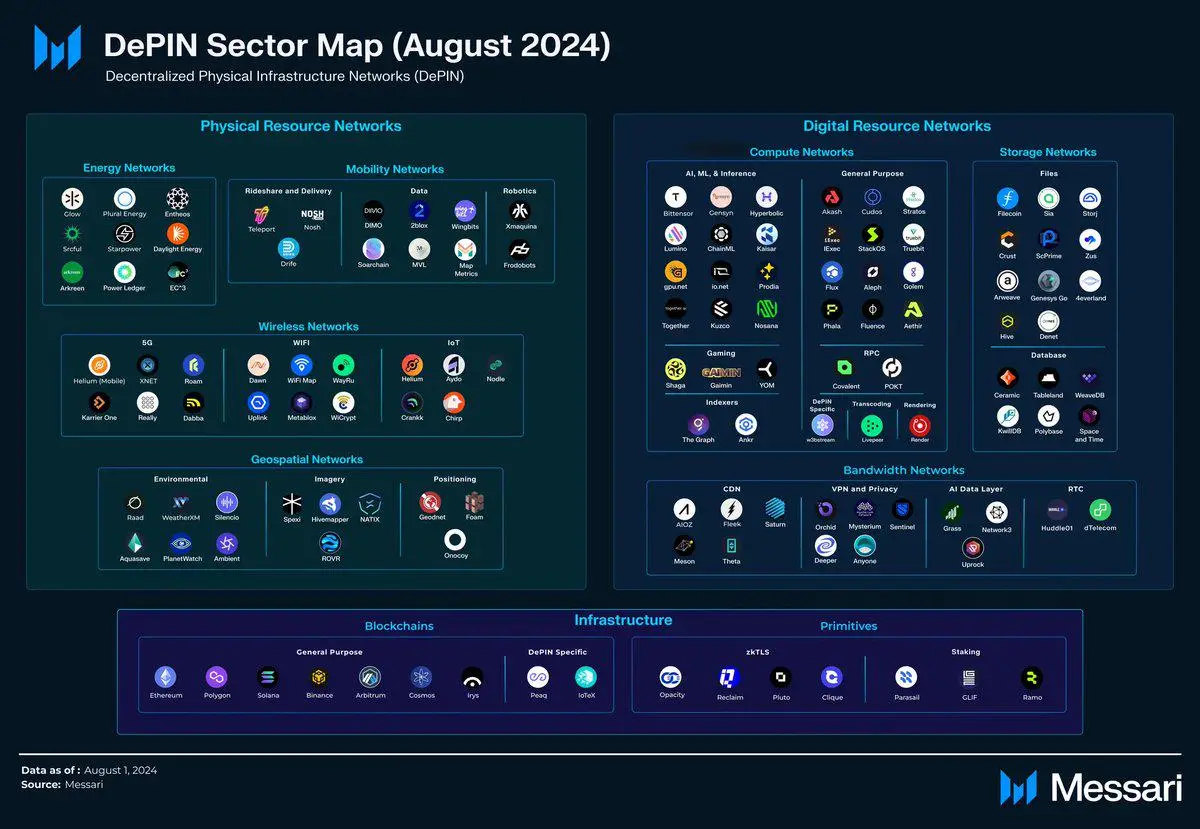
The market for these projects clusters into practical categories like compute, storage, and wireless. Token rewards incentivize individuals to install nodes, creating a dense mesh network that would be too costly for a single entity to fund. This decentralized structure is reshaping the connectivity landscape for underserved areas.
Leading DePIN wireless projects
The decentralized wireless sector is moving beyond experimental prototypes to active, revenue-generating infrastructure. As of 2026, the market is dominated by projects that successfully bridge the gap between community-built hardware and functional telecommunications services. These networks operate on a shared infrastructure model, allowing users to earn tokens by deploying hotspots that provide coverage where traditional ISPs have failed to invest.
Helium Mobile leads the charge with its hybrid 5G model. By combining LoRaWAN for IoT with cellular coverage through partnerships, it has become the most visible example of DePIN delivering actual mobile service. Hivemapper, while primarily focused on mapping, uses similar decentralized incentive structures to build data layers critical for navigation, while projects like IoTeX focus on the underlying hardware security and identity for these mesh networks. The following comparison highlights the distinct technical approaches and market positions of these leading protocols.
| Project | Primary Focus | Core Tech | 2026 Status |
|---|---|---|---|
| Helium Mobile | Consumer 5G | Hybrid 5G/IoT | Live commercial service |
| Hivemapper | Mapping Data | Dashcams/Blockchain | Active data marketplace |
| IoTeX | Hardware Security | IoT Device Identity | Enterprise partnerships |
| Filecoin | Decentralized Storage | Distributed Storage | High utilization |
| Arweave | Permanent Storage | Blockweave | Active archive network |
The tokenomics of these networks vary significantly. Helium Mobile relies on a dual-token system to separate network security from consumer payments, a model that has helped stabilize its valuation despite market volatility. Hivemapper incentivizes drivers to capture street-level imagery, creating a high-frequency data feed that competes with traditional mapping giants. Meanwhile, storage-focused DePINs like Filecoin and Arweave provide the backend infrastructure for these wireless applications, ensuring that the data generated by decentralized networks remains accessible and secure. Understanding these differences is essential for evaluating which projects offer the most sustainable long-term value.
Evaluating token incentives for hardware deployment
To evaluate DePIN wireless projects effectively, start by identifying your primary constraint: capital efficiency, coverage density, or long-term yield. Separate must-have requirements from features that are merely nice to have. A practical investment should survive normal market volatility, maintenance costs, and timing risks. If a recommendation only works in an ideal bull market scenario, note that limitation and consider a fallback strategy, such as dollar-cost averaging into established protocols.
The most effective evaluation method is to list your must-have criteria first, then compare each option against those baseline needs before weighing secondary features. This prevents over-indexing on hype and ensures the chosen project aligns with your actual risk tolerance and technical understanding of the underlying mesh network.
Rural broadband alternatives and coverage gaps
DePIN wireless solutions address specific coverage gaps by deploying low-power wide-area network (LPWAN) devices in areas ignored by major carriers. Unlike traditional fiber or cable deployments, these networks require minimal permitting and can be installed by residents or small businesses. The key distinction is that DePIN relies on user-generated coverage rather than centralized tower construction.
When assessing coverage, verify the actual density of active hotspots in your target area rather than relying on theoretical map overlays. A high number of deployed devices does not guarantee quality service if the underlying consensus mechanism or data routing is inefficient. Check real-world speed tests and latency reports from local users to confirm the network's performance under load.
Market risks and regulatory hurdles
Investing in DePIN wireless involves navigating evolving regulatory landscapes, particularly regarding spectrum licensing and telecommunications compliance. Helium Mobile, for example, operates under a Mobile Virtual Network Operator (MVNO) agreement, which mitigates some direct regulatory risks but introduces dependency on partner carriers. Other projects may face stricter scrutiny as they scale into critical infrastructure roles.
Market risks also include token volatility and the potential for centralization if a few large holders dominate the network. Evaluate the governance structure of each project to ensure that decision-making remains decentralized and resistant to single-point failures. Diversifying across different DePIN subsectors—such as combining wireless, storage, and compute projects—can help mitigate sector-specific downturns.
No comments yet. Be the first to share your thoughts!