Why decentralized wireless matters now
Traditional telecom operators face mounting pressure from the capital-intensive nature of building 5G and future 6G networks. The cost of spectrum licenses, tower construction, and maintenance creates a barrier that limits rapid expansion, particularly in underserved or rural areas. As data consumption grows exponentially, legacy infrastructure struggles to keep pace without significant rate hikes or service degradation.
Decentralized Physical Infrastructure Networks (DePIN) offer an alternative model by leveraging community-contributed hardware. Instead of a single entity funding every cell tower, individuals and small businesses deploy low-power nodes that aggregate into a larger coverage map. This approach shifts the burden from centralized capex to distributed, incentivized participation, often resulting in faster deployment cycles and lower consumer costs.
This shift is not merely about cost savings; it is about resilience and accessibility. When infrastructure is distributed across thousands of independent operators, the network becomes less vulnerable to single points of failure. For investors and analysts, the key metric is no longer just subscriber count, but the actual geographic coverage and throughput delivered by these decentralized meshes.
The race to decentralize 5G infrastructure is driven by the economic reality that building a global network from scratch is prohibitively expensive for any single company. DePIN projects like Helium demonstrate that community-driven models can achieve significant scale, offering a viable path toward ubiquitous, high-speed connectivity without the heavy overhead of traditional telecom.
Top decentralized wireless networks in 2026
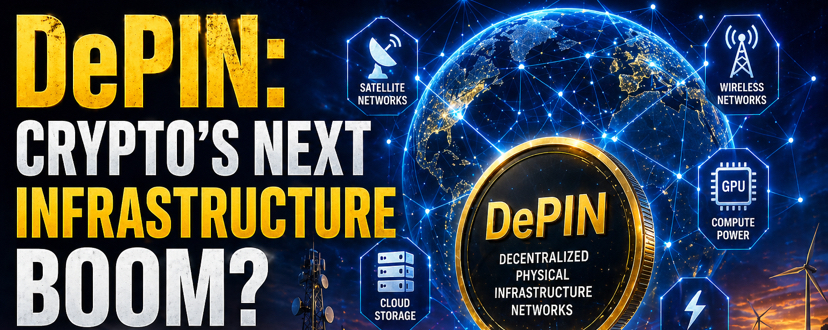
The decentralized wireless sector has matured from experimental pilot programs to operational networks with measurable coverage and sustained tokenomic incentives. As of 2026, the market is dominated by three primary protocols: Helium, Titan Network, and XAI. Each offers a distinct approach to providing 5G and IoT connectivity, differentiated by their underlying blockchain architecture, hardware requirements, and reward mechanisms.
Investors and infrastructure operators must evaluate these networks based on coverage density, consensus efficiency, and the sustainability of their incentive models. The following comparison highlights the core metrics that determine the utility and investment profile of each project.
| Protocol | Consensus | Primary Coverage | Hardware Req. |
|---|---|---|---|
| Helium (HNT) | Proof of Coverage (PoC) | Global 5G & IoT | Mobile Hotspots |
| Titan Network (TITAN) | PoS (Solana) | Urban 5G Focus | Enterprise Gateways |
| XAI (XAI) | PoS (EVM) | Global IoT | IoT Modules |
Helium remains the largest decentralized wireless network by user count, leveraging its Proof of Coverage (PoC) mechanism to reward hotspot owners for providing valid wireless coverage. Its migration to the Solana blockchain has significantly reduced transaction costs and increased throughput, allowing for more frequent and granular reward distributions. However, the network faces challenges related to hotspot saturation in certain urban areas and regulatory scrutiny in key markets.
Titan Network has carved out a niche by focusing on high-density urban 5G connectivity using enterprise-grade gateways. By operating on Solana, Titan benefits from low fees and fast finality, which is critical for real-time IoT data transmission. Its incentive structure is designed to attract institutional hardware providers rather than individual retail hotspot operators, aiming for higher reliability and service-level agreements (SLAs).
XAI (XAI) distinguishes itself by targeting the global IoT market with a focus on low-power, wide-area network (LPWAN) capabilities. Its EVM-compatible architecture allows for easy integration with existing Ethereum-based DeFi applications, offering a unique bridge between physical infrastructure and financial services. XAI’s hardware requirements are minimal, enabling broader participation from users in developing regions with limited internet infrastructure.
DePIN Token Market Performance
The financial reality of decentralized physical infrastructure (DePIN) is defined by high volatility and speculative momentum. While the underlying network growth is measurable, the token prices often decouple from infrastructure utility, reflecting broader crypto market sentiment rather than immediate operational revenue. Investors analyzing the sector must distinguish between network expansion metrics and price action, as the two rarely move in lockstep during early adoption phases.
Helium (HNT) serves as a primary case study for this dynamic. As one of the earliest wireless DePIN projects, its token has experienced significant price swings, mirroring the broader altcoin cycle rather than solely reflecting the number of active hotspots. The market rewards the promise of coverage expansion, but price corrections often follow when hardware deployment costs outpace user adoption rates. This pattern is common across major DePIN tokens, where initial hype drives valuations before sustainable utility emerges.
To visualize this volatility, we track the price action of major DePIN assets. The following chart illustrates the recent trading range for a leading DePIN token, highlighting the sharp rallies and subsequent consolidations typical of the sector.
Live price data provides a real-time snapshot of this volatility. The widget below displays the current market price and trading volume for Helium, offering a quick reference for traders monitoring short-term trends.
Beyond individual tokens, the sector shows divergent performance based on infrastructure type. Wireless connectivity projects like Helium often face different regulatory and hardware constraints compared to data storage or compute networks. This divergence creates distinct market cycles, where capital rotates between sub-sectors based on technological breakthroughs or partnership announcements rather than uniform sector-wide growth. Understanding these nuances is critical for assessing long-term sustainability versus short-term speculation.
Risks and regulatory hurdles
The path to decentralized 5G infrastructure is fraught with regulatory ambiguity and technical fragility. While the promise of distributed networks is compelling, the reality involves navigating a complex web of spectrum licensing laws and hardware maintenance challenges. Investors must look beyond the tokenomics to understand the physical and legal constraints that define these projects.
Spectrum and Regulatory Compliance
In the United States, the Federal Communications Commission (FCC) strictly regulates the radio frequency spectrum. DePIN wireless projects often operate in unlicensed bands (such as 900 MHz or 2.4 GHz) to lower barriers to entry, but this limits their range and capacity compared to licensed carriers. Any move into licensed spectrum requires expensive auctions and strict compliance with interference rules. A single regulatory violation can halt network operations or result in significant fines, making legal readiness a primary risk factor.
Hardware Reliability and Maintenance
Unlike centralized cell towers owned by major telecoms, DePIN relies on thousands of individual hotspots deployed in residential and commercial spaces. This distributed model introduces significant operational risks. Hardware failure, power outages, or physical damage are common and often unreported until a node goes offline. Unlike a centralized data center with 24/7 IT staff, hotspot owners are typically amateurs. This leads to inconsistent network uptime and data quality, which can undermine the utility of the network for enterprise clients.
Token Inflation and Economic Sustainability
The economic model of many DePIN projects relies on issuing tokens to incentivize hardware deployment. However, this often creates a sell pressure that outpaces demand. If the network cannot generate sufficient real-world revenue to buy back and burn these tokens, the price can collapse, making it unprofitable for new participants to join. This "inflationary death spiral" is a common failure mode in infrastructure tokens that prioritize growth over sustainable unit economics.
How to evaluate DePIN wireless investments
Evaluating DePIN wireless projects requires separating infrastructure utility from speculative token hype. Unlike software protocols, these networks rely on physical hardware deployment, making supply chain logistics and hardware accessibility critical due diligence points. You must verify that the hardware is actually available to retail participants and not just reserved for large institutional miners.
Check if the required hotspots or routers are commercially available and priced reasonably. If hardware is sold out indefinitely or requires a massive upfront capital expenditure with no clear ROI timeline, the project may be designed for early insiders rather than organic network growth.

Analyze the token emission schedule and utility. A healthy DePIN model uses tokens to pay providers for real-world data or coverage, not just to subsidize speculation. Look for mechanisms that balance provider rewards with network usage fees to prevent hyperinflation.
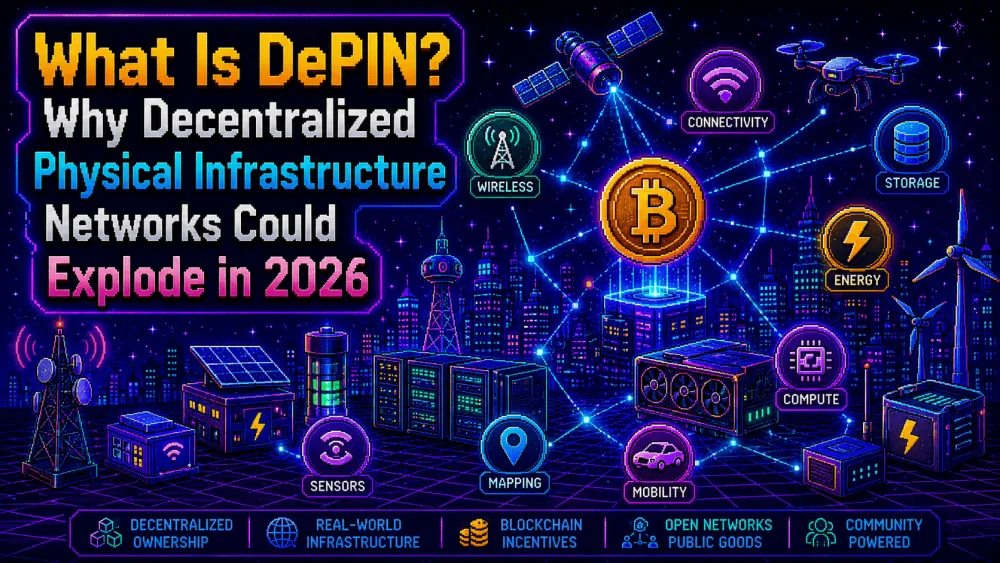
Ignore vanity metrics like total value locked (TVL). Instead, look for active coverage maps, verified gigabytes of data transferred, or active user connections. Projects must demonstrate that their wireless infrastructure is being used by actual consumers or enterprises, not just bots.
No comments yet. Be the first to share your thoughts!