
DePIN wireless 2026 market overview
The hype cycle for Decentralized Physical Infrastructure Networks (DePIN) has settled into a more pragmatic phase. By 2026, the initial noise surrounding whitepapers and speculative tokenomics has faded, replaced by a focus on tangible utility. The market is shifting from abstract promises to concrete alternatives for essential services, particularly in rural broadband and connectivity. This transition marks a critical evolution for DePIN wireless, as projects that cannot deliver reliable infrastructure are being filtered out.
Investment interest remains steady, driven by the growing demand for decentralized resources. As noted by industry observers, infrastructure needs are expanding beyond simple storage to include high-bandwidth requirements for AI applications and user connectivity. This broader demand provides a stable foundation for DePIN wireless networks, which aim to fill gaps left by traditional Internet Service Providers (ISPs). The sector is no longer just about crypto speculation; it is about building physical networks that users actually rely on.
Market sentiment is best reflected in the performance of leading assets like Helium (HNT). The following chart illustrates recent price action for HNT, offering a glimpse into how investors are valuing the potential of decentralized wireless infrastructure.
Leading DePIN wireless projects in 2026
The DePIN wireless sector has moved beyond experimental phases into established networks that rival traditional ISPs in specific use cases. These projects replace centralized infrastructure with community-owned hardware, offering coverage models ranging from dense urban Wi-Fi to rural cellular connectivity.
Each network operates a distinct incentive structure. Users earn tokens by deploying hardware or validating data, creating a flywheel effect that expands coverage without corporate capital expenditure. Understanding the differences between these networks is essential for investors and early adopters alike.
Helium Mobile and IoT
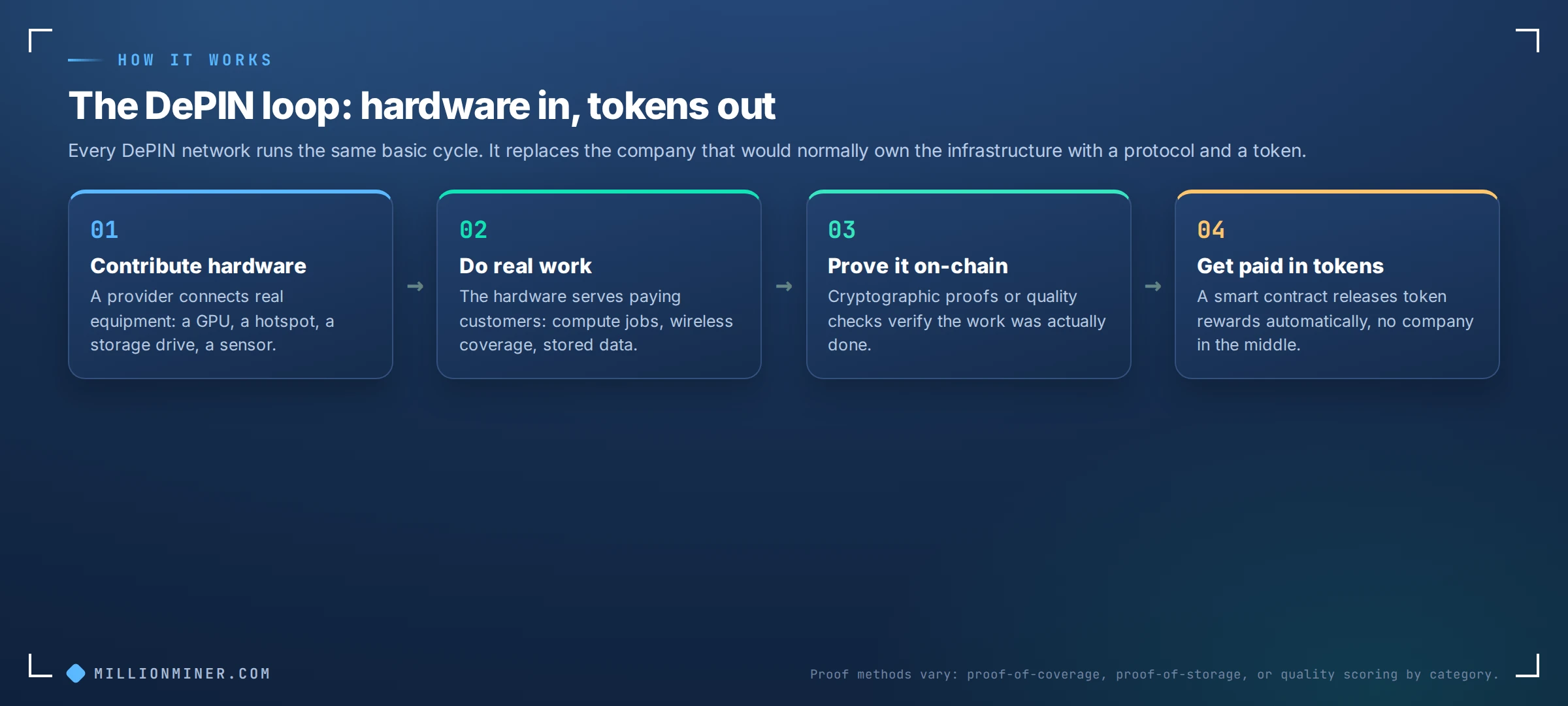
Helium remains the market leader in decentralized wireless, having pivoted from pure IoT to consumer mobile coverage. Its model relies on Hotspots that provide 5G coverage through partnerships with major carriers like T-Mobile. The network uses a Proof of Coverage (PoC) consensus mechanism, where miners are rewarded for proving their radio equipment works as advertised.
Helium’s token, HNT, is burned to issue Mobile Subscriptions, linking demand for the token directly to network usage. This deflationary pressure is a key differentiator from other DePIN projects. The network now covers millions of square miles, making it the most battle-tested DePIN wireless infrastructure available.
LoRaWAN and IoT Networks
For non-cellular applications, LoRaWAN-based networks like The Graph’s subgraphs and specialized IoT DePINs focus on low-power, long-range connectivity. These networks are ideal for smart meters, agricultural sensors, and asset tracking where high bandwidth is unnecessary but battery life is critical.
These projects typically reward miners based on data packets verified or bandwidth provided. They operate on a simpler economic model than mobile networks, focusing on volume and reliability of sensor data rather than consumer-grade internet speed.
Comparison of Top DePIN Wireless Networks
The table below outlines the primary differences between the leading DePIN wireless projects, focusing on coverage type, token mechanics, and current network density.
| Network | Coverage Type | Token Incentive | Network Density |
|---|---|---|---|
| Helium Mobile | 5G Cellular | HNT Burn & Rewards | High (Major US Cities) |
| Helium IoT | LoRaWAN | HNT & IOT | Very High (Global) |
| Nebra | Hybrid | Hardware Sales + HNT | Medium (Hardware-focused) |
| SOL Radio | Wi-Fi/5G | SOL & Token | Low (Early Stage) |
Technical Analysis of DePIN Tokens
The financial health of these networks is reflected in their token performance. DePIN tokens often correlate with broader crypto market trends but are also influenced by specific network upgrades and adoption metrics.
Rural broadband alternatives and coverage maps
Decentralized Physical Infrastructure Networks (DePIN) are addressing the rural broadband gap by turning underserved areas into profitable nodes rather than dead zones. Traditional ISPs often view these regions as financially unviable due to high deployment costs and low population density. DePIN changes this calculus by leveraging community-owned hardware, allowing residents to provide connectivity in exchange for token rewards. This model creates a self-sustaining infrastructure layer that bypasses the need for massive corporate capital expenditure.
Coverage maps for networks like Helium Mobile provide real-time evidence of this deployment. Unlike static government broadband maps that often lag behind actual service availability, DePIN coverage is live and granular. These maps show exactly where hotspots are active, offering a transparent view of network penetration in remote counties. This visibility helps residents identify where they can join the network and where additional hardware is needed to fill signal gaps.
The economic incentive aligns with local needs. When a household installs a hotspot, they are not just getting internet; they are contributing to a distributed mesh that improves connectivity for neighbors. This peer-to-peer expansion is particularly effective in rural areas where traditional infrastructure is sparse. The result is a more resilient network that does not rely on a single point of failure, such as a central tower or fiber line.
Participation in these networks is tied to the value of the underlying tokens. Monitoring live asset prices helps users understand the potential returns on their hardware investment. For example, the Helium Network Token (HNT) reflects the economic health of the wireless coverage layer. A stable or growing token price often indicates a healthy, expanding network with sufficient demand for coverage.
This approach offers a viable alternative for rural residents tired of limited options and high costs. By participating in DePIN wireless networks, communities can build their own internet infrastructure, one hotspot at a time. The coverage maps serve as both a tool and a testament to the growing reach of these decentralized alternatives.
Token economics and hardware requirements
The financial model for DePIN wireless relies on a clear exchange: participants provide physical infrastructure in return for native tokens. This structure removes the traditional ISP middleman, allowing individuals and small businesses to monetize idle bandwidth. However, the profit margin is heavily influenced by local demand and the specific reward curve of the chosen network.
Hardware costs
Entry-level hardware varies significantly by protocol. Some networks, like Silencio, allow participation with low-cost, off-the-shelf Wi-Fi extenders, while others require proprietary gateways with specialized radio frequencies. For DePIN wireless, the initial outlay typically ranges from $50 to $300. It is essential to verify hardware compatibility before purchase, as proprietary devices often lock you into a single ecosystem.
Staking and reward structures
Many DePIN wireless networks require token staking to ensure node reliability and prevent spam. Staking acts as a bond; if a node goes offline or provides poor service, a portion of the staked tokens may be slashed. Rewards are distributed based on uptime, verified data throughput, and geographic coverage priority. The effective annual percentage yield (APY) fluctuates with token price and network adoption.
Live Market Context
Understanding the current price action of the underlying token is critical for forecasting potential earnings. Below is a live chart for a major DePIN-related asset to illustrate market behavior.
No comments yet. Be the first to share your thoughts!