Why mesh networks disrupt ISPs
DePIN wireless 2026 represents a structural shift in connectivity, moving from centralized utility monopolies to distributed, user-owned infrastructure. Traditional Internet Service Providers (ISPs) rely on high capital expenditure (CapEx) to build and maintain closed-loop tower networks. This model creates high barriers to entry and limits competition, allowing incumbents to maintain pricing power through geographic exclusivity. In contrast, decentralized physical infrastructure networks (DePIN) leverage existing consumer hardware to expand coverage organically.
The economic advantage lies in the distribution of ownership. In a DePIN model, participants contribute hardware assets rather than a single corporate entity controlling the entire stack. This decentralization reduces the marginal cost of adding new nodes, as the network expands through individual adoption rather than corporate construction. The result is a more resilient grid that does not depend on a single point of failure or a centralized billing department.
This shift transforms connectivity from a passive utility into an active asset class. By tokenizing the provision of bandwidth, DePIN networks align incentives between users and providers. As the sector matures in 2026, the competitive pressure on traditional ISPs will intensify, not through regulatory intervention, but through superior unit economics and user-driven scalability.
Helium Mobile hybrid architecture
Helium Mobile represents the most advanced application of DePIN wireless 2026 principles to cellular connectivity. By leveraging a hybrid model, it merges a community-owned mesh of 5G hotspots with traditional carrier infrastructure. This architecture allows the network to provide coverage where decentralized nodes exist while relying on major carriers for broader reach, effectively creating a resilient, distributed communication layer.
The investment case hinges on this dual-layer strategy. Users own the hardware, operating hotspots that earn rewards for providing coverage. This decentralizes the cost of network expansion, shifting capital expenditure from a single corporate entity to a distributed network of participants. The result is a scalable model that avoids the prohibitive costs of building private cellular towers everywhere.
To track market sentiment surrounding this leading DePIN project, investors monitor the HNT token closely.
How Node Operators Earn Revenue
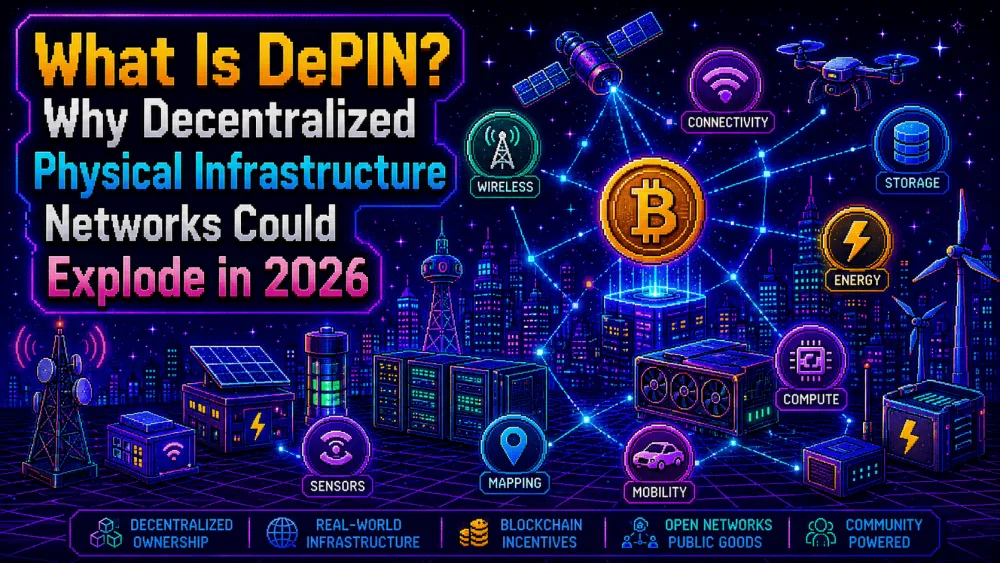
The financial viability of DePIN wireless 2026 depends on a dual-revenue model that rewards both network participation and data utility. Unlike traditional telecoms where infrastructure costs are absorbed by a central entity, these networks distribute value directly to hardware owners. Operators generate income through two primary mechanisms: coverage proofs for network expansion and data transfer fees for active usage.
Coverage Proofs and Network Expansion
The first revenue stream pays for the physical deployment of infrastructure. Node operators earn tokens by providing verifiable evidence that their hardware is active and contributing to the network’s geographic footprint. This is typically achieved through cryptographic "proofs of coverage," which confirm that a device is broadcasting and receiving signals at a specific location.
This mechanism aligns operator incentives with network growth. As more nodes are deployed, the network becomes more valuable to potential users and enterprise clients. The token rewards for coverage proofs act as a subsidy, helping to offset the initial capital expenditure of hardware and installation. This model ensures that network expansion is decentralized and driven by market participants rather than a single corporate strategy.
Data Transfer and Active Usage
The second, and often more significant, revenue stream comes from actual data transfer. When users or enterprises utilize the network for bandwidth, they pay fees in the native token. These fees are distributed among the node operators who facilitated the connection. This creates a direct link between network utility and operator income.
In this model, operators are incentivized to maintain high-quality service. Poor signal strength or frequent downtime results in fewer data transfers and lower earnings. This market-driven quality control ensures that the network remains competitive with traditional infrastructure providers. The revenue potential scales with usage, meaning operators benefit directly from the network’s adoption and traffic volume.
Hardware Ownership and Long-Term Value
A critical component of this economic model is hardware ownership. In DePIN wireless 2026, users own the physical assets, unlike traditional service platforms where a single company controls the infrastructure. This ownership structure allows operators to capture the full value of their investment, rather than paying rent to a central provider.
This shift in ownership changes the risk-reward profile for participants. Operators bear the upfront cost and maintenance responsibility, but they also retain the asset and the right to its future cash flows. As the network matures and data demand grows, the value of the underlying hardware and the associated token rewards can appreciate, offering a potential long-term return on investment beyond immediate operational income.
Top wireless DePIN projects ranked
The decentralized wireless infrastructure sector has matured from experimental prototypes to operational networks capable of handling real traffic. For investors analyzing DePIN wireless 2026 opportunities, the landscape is dominated by projects that have successfully bridged the gap between token incentives and physical hardware deployment.
The following comparison highlights the leading players based on their token economics, network scope, and market positioning. These metrics provide a baseline for evaluating risk and potential yield in the current cycle.
| Project | Ticker | Primary Focus | Market Cap Rank |
|---|---|---|---|
| Helium | HNT | 5G Mobile & IoT | 1 |
| Hivemapper | HONEY | Decentralized Maps | 2 |
| IoTeX | IOTX | IoT Device Network | 3 |
| Nym | NYM | Privacy Infrastructure | 4 |
Helium remains the market leader in decentralized wireless, with its mobile network now covering significant portions of North America and Europe. Its hybrid model of 5G hotspots distinguishes it from pure IoT networks. Hivemapper, while primarily mapping-focused, utilizes similar decentralized incentive structures and has expanded into vehicle-based data collection. IoTeX focuses on the device layer, providing secure hardware for IoT applications that feed into broader DePIN ecosystems. Nym addresses the privacy layer, ensuring that the data transmitted over these wireless networks remains secure and untraceable.
When evaluating these assets, investors should look beyond current market capitalization. The value of DePIN wireless 2026 projects lies in their ability to sustain hardware deployment costs through token emissions while achieving profitable utilization rates. Networks with higher active user counts and lower churn rates typically demonstrate stronger long-term viability.
Helium Price Technical Analysis
Helium (HNT) serves as the primary liquidity anchor for the DePIN wireless narrative, making its technical structure a leading indicator for sector sentiment. Unlike broader crypto markets, HNT price action is heavily influenced by hardware deployment cycles and mobile subscriber growth, creating distinct support and resistance zones tied to network utility rather than pure speculation.
The daily chart reveals a consolidation phase following the initial volatility of the 2024–2025 bull run. Volume profiles suggest institutional accumulation near current levels, with key resistance forming at previous all-time highs. Breakouts above this zone typically require sustained growth in Helium Mobile’s user base, while declines below major moving averages often signal a reset in infrastructure investment timelines.
Traders monitoring DePIN wireless 2026 trends should watch the 200-day moving average as a baseline for long-term trend health. A sustained hold above this line indicates that the underlying physical infrastructure build-out remains intact. Conversely, a break below often precedes a deeper correction as speculative capital exits before fundamental metrics deteriorate.
FAQs on decentralized wireless infrastructure
What is the primary economic driver for DePIN wireless 2026?
The primary economic driver is the reduction of capital expenditure (CapEx) through distributed ownership. By allowing users to own hardware assets, DePIN networks lower the marginal cost of expansion compared to traditional ISPs, which must bear the full cost of tower construction and maintenance.
How does Helium Mobile’s hybrid architecture work?
Helium Mobile combines a community-owned mesh of 5G hotspots with traditional carrier infrastructure. This allows the network to provide coverage in areas with active hotspots while relying on major carriers for broader reach, creating a resilient, distributed communication layer that avoids the prohibitive costs of building private cellular towers everywhere.
How do node operators generate revenue in DePIN networks?
Node operators earn revenue through two main mechanisms: coverage proofs and data transfer fees. Coverage proofs reward operators for providing verifiable evidence of network presence and expansion, while data transfer fees compensate operators for facilitating active bandwidth usage by users and enterprises.
No comments yet. Be the first to share your thoughts!