The shift to decentralized wireless
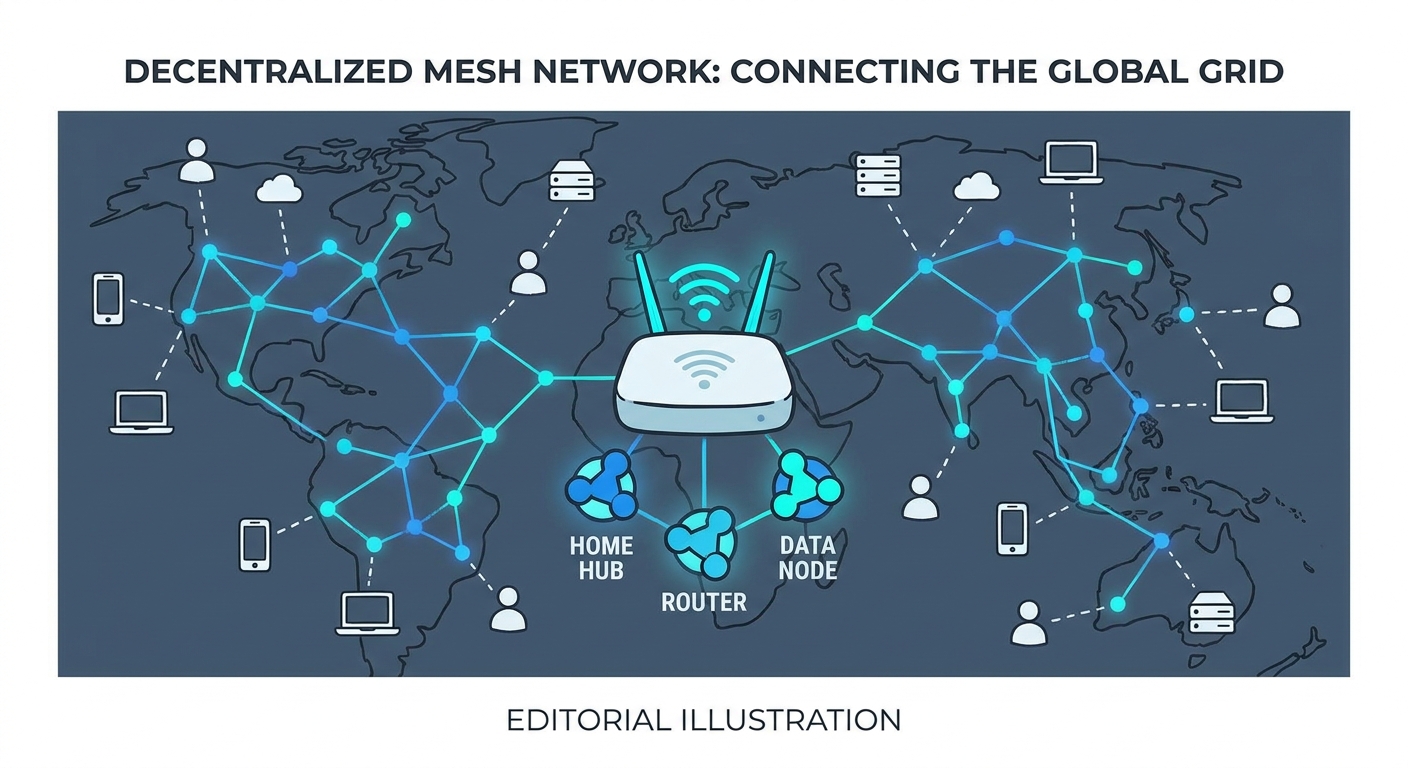
The telecommunications landscape is undergoing a structural pivot. Decentralized Physical Infrastructure Networks (DePIN) are moving from experimental pilots to a dominant force in wireless connectivity. By 2026, the market cap for DePIN projects is projected to reach $3.5 trillion, a figure that underscores the scale of capital flowing away from traditional centralized models [Messari]. This growth is not merely speculative; it reflects a tangible replacement of legacy ISP infrastructure with community-owned mesh networks.
The advantage of this model lies in its distribution. Traditional ISPs rely on heavy capital expenditure for tower construction and fiber laying, creating high barriers to entry and slow deployment cycles. DePIN wireless flips this equation. Individuals and small businesses provide the physical hardware—routers, hotspots, and sensors—creating a dense, organic mesh. This approach reduces the cost of infrastructure acquisition and accelerates network expansion, particularly in areas underserved by major providers.
This shift challenges the monopoly of incumbent telecom companies. As DePIN networks mature, they offer a viable alternative that prioritizes user ownership and tokenized incentives. The result is a more resilient, decentralized internet backbone that scales with the community rather than corporate boardrooms.
Helium Mobile network status
Helium Mobile has evolved from a speculative DePIN experiment into the most functional decentralized cellular alternative currently available. By leveraging the existing Helium Hotspot infrastructure, the network provides 5G coverage across the United States without the capital expenditure required for traditional tower construction. This model positions Helium not just as a token play, but as a tangible ISP competitor with a growing subscriber base.
The network’s viability hinges on the dual utility of its native token, HNT. Users can pay for mobile plans using HNT, creating a closed-loop economy that drives demand for the asset. This mechanism differentiates Helium from other DePIN projects that rely solely on external funding or ad revenue. The integration of the mobile network with the broader Helium ecosystem allows for seamless data transfer between IoT devices and mobile users.
Investment risk analysis for Helium Mobile requires monitoring the correlation between network growth and token price stability. While the user experience has improved significantly, the network still faces challenges in rural coverage density compared to major carriers. However, the low barrier to entry for Hotspot operators continues to expand coverage areas organically.
To understand Helium’s position relative to other DePIN wireless initiatives, it is essential to compare key metrics such as coverage area, token utility, and hardware requirements. The following table outlines how Helium Mobile stacks up against emerging competitors in the decentralized cellular space.
| Project | Primary Coverage | Token Utility | Required Hardware |
|---|---|---|---|
| Helium Mobile | USA (Expanding) | Pay for plans, earn HNT | Hotspot + Mobile Hotspot |
| Solv Protocol | Limited/Testing | Staking, Governance | Solv Nodes |
| Nym Network | Global (VPN) | Privacy payments | Mixnode |
| IoTeX | IoT Focus | Device payments | IoTeX Devices |
IoTeX and community hotspots
IoTeX approaches decentralized wireless infrastructure by prioritizing the Internet of Things (IoT) over consumer-grade cellular connectivity. This strategic divergence creates a distinct market position, focusing on low-power, wide-area networks (LPWAN) that support sensors, smart meters, and industrial devices rather than competing directly with traditional ISP broadband speeds. By targeting a different layer of the physical infrastructure stack, IoTeX reduces the technical friction for participants and lowers the capital expenditure required to join the network.
The barrier to entry for IoTeX hotspot operators is significantly lower than that of cellular DePIN projects. While cellular networks require expensive spectrum licenses and high-power hardware, IoTeX’s LoRaWAN-based architecture allows participants to deploy small, battery-operated nodes. This accessibility encourages broader community adoption, particularly in regions where centralized telecom coverage is sparse or economically unviable. The result is a distributed mesh that can scale organically without the heavy regulatory and financial burdens associated with licensed spectrum.
For investors, this model offers exposure to the growing IoT sector while mitigating the risks of direct competition with established telecom giants. The network’s value proposition lies in its ability to monetize underutilized physical assets for machine-to-machine communication. As the IoT market expands, IoTeX’s focus on specialized, low-bandwidth data transmission positions it as a niche but critical component of the broader DePIN ecosystem. The IOTX token serves as the economic engine for this activity, rewarding node operators for providing reliable coverage to IoT devices.
Comparison of top wireless DePIN networks
Selecting a mesh network requires weighing coverage density against hardware entry costs and token stability. The following comparison outlines the primary metrics for Helium, IoTeX, and Hivemapper, focusing on their utility in wireless infrastructure.
| Project | Primary Coverage | Hardware Cost | Token Stability |
|---|---|---|---|
| Helium | Global IoT & Mobile | $150–$300 | High volume, volatile |
| IoTeX | IoT & Auto | $50–$150 | Moderate, utility-driven |
| Hivemapper | Road Data (US/EU) | $200–$400 | High, earnings-backed |
Helium remains the market leader in geographic reach, leveraging a massive existing node base for IoT and mobile data. However, its high token velocity can create volatility for long-term holders. IoTeX offers a lower barrier to entry with specialized hardware, appealing to those focused on localized IoT applications. Hivemapper distinguishes itself through a stable, earnings-backed token model, though its wireless utility is currently tied to data collection rather than direct connectivity.
DePIN Asset Volatility and Technical Context
The infrastructure layer of DePIN wireless is built on utility, but the token assets backing these networks trade with the volatility of high-beta crypto. Helium (HNT) serves as the primary benchmark for this sector, reflecting broader market sentiment toward decentralized physical infrastructure. Investors must distinguish between the long-term value of network coverage and the short-term price action of the underlying token.
Technical analysis of HNT reveals a market heavily influenced by liquidity cycles and adoption metrics. Unlike traditional equities, DePIN tokens lack standardized earnings reports, making chart patterns and on-chain volume critical indicators. Traders often watch for breakouts in weekly ranges, which frequently correlate with major network upgrades or enterprise partnerships.
The following chart tracks HNT/USD performance, providing a live view of market momentum. This provider-backed widget offers real-time data, essential for assessing entry and exit points in a sector known for rapid price swings.
Evaluating ISP alternatives
Switching to DePIN wireless requires treating connectivity as a capital allocation decision rather than a simple utility purchase. The market cap for decentralized physical infrastructure has expanded significantly, yet reliability remains the primary friction point against traditional ISPs. Before committing hardware or capital, participants must verify that the network’s service level agreements match their operational needs.
Assess network reliability and coverage
Decentralized networks must prove they can match the uptime of centralized incumbents. Evaluate the node density in your specific geographic area, as coverage gaps directly impact throughput and latency. Rely on official network dashboards rather than promotional materials to verify actual active nodes and historical performance data.
Understand regulatory and token risks
Token compensation models introduce regulatory uncertainty that centralized providers do not face. Income generated from providing bandwidth or storage is subject to market volatility and potential regulatory shifts. Ensure you understand the tax implications and legal status of token rewards in your jurisdiction before deploying infrastructure.
Calculate total cost of ownership
While DePIN projects promise lower monthly fees, the upfront cost of hardware and energy consumption must be factored into the ROI. Compare the break-even timeline against traditional ISP contracts. Use provider-backed widgets to track the current value of network tokens, as static price estimates quickly become obsolete in this asset class.
Frequently asked: what to check next
Does DePIN have a future?
DePIN’s viability hinges on proving that decentralized services can match the reliability and user experience of established, centralized providers. As these networks scale globally, regulatory uncertainty regarding token compensation models remains a critical hurdle that projects must navigate carefully to ensure long-term sustainability.
How to make money with DePIN?
Participants generate income by providing physical assets—such as spare bandwidth or storage space—to the DePIN ecosystem. This model allows individuals to monetize underutilized resources, earning tokens that can be traded or held for potential appreciation as the network grows.
How big is the DePIN market?
The sector has demonstrated significant growth, with the DePIN market cap standing at over $50 billion in 2024. Projections indicate robust expansion, with the market expected to reach up to $3.5 trillion by 2028, driven by increasing adoption of decentralized infrastructure across storage, compute, and wireless connectivity.
No comments yet. Be the first to share your thoughts!