How DePIN wireless changes infrastructure ownership
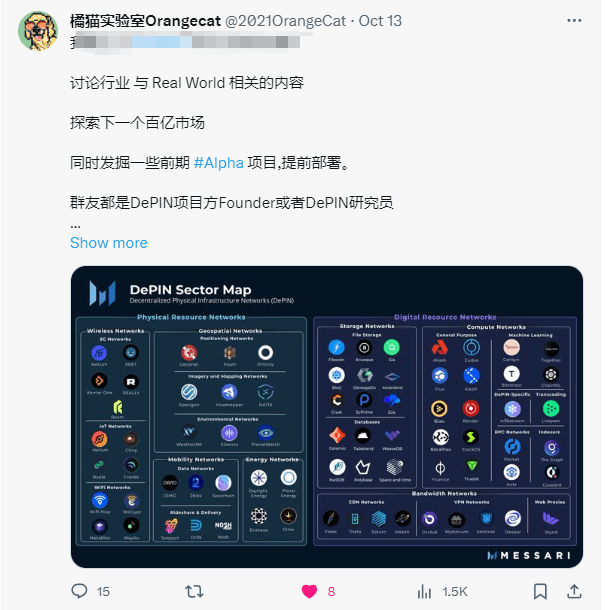
DePIN wireless—short for decentralized physical infrastructure networks—replaces the traditional carrier model with a user-owned alternative. Instead of a single company controlling every tower and router, these networks rely on individuals and small businesses to host the hardware. This shift moves the power from centralized monopolies to a distributed community of participants.
In a DePIN wireless setup, you own the physical equipment that provides coverage. Whether it is a small cell antenna or a broadband gateway, the device operates as part of a larger mesh. Participants earn token rewards for providing connectivity, turning their homes or offices into nodes that expand network reach without corporate overhead.
The value proposition for 2026 lies in this democratization of connectivity. By removing the need for massive capital expenditure on centralized infrastructure, DePIN wireless lowers the barrier to entry for new providers and offers users a direct stake in the network's success. This creates a more resilient and expansive telecom landscape that grows organically with its users.
Helium network updates and mobile expansion
The Helium network has evolved from a niche IoT coverage map into a foundational layer for decentralized mobile connectivity. As the largest DePIN wireless network, its recent technical upgrades and aggressive mobile expansion are defining the practical reality of 2026 telecom infrastructure. The shift from purely machine-to-machine communication to human-grade mobile data represents the network’s most significant strategic pivot.
Helium Mobile’s integration of carrier-grade SIMs allows users to roam on major US carriers like T-Mobile while simultaneously earning HNT tokens for providing coverage. This dual-mode operation creates a hybrid network where consumer devices act as both endpoints and infrastructure nodes. The result is a rapid, capital-efficient expansion of 5G coverage that traditional telcos would struggle to replicate at the same pace.

Technical improvements to the Helium 2.0 blockchain have also addressed earlier scalability bottlenecks. By transitioning to a more efficient consensus mechanism, the network now supports higher transaction throughput with lower latency, which is critical for real-time mobile data routing. These upgrades ensure that the underlying ledger can handle the volume of data traffic generated by millions of active mobile users without compromising security or speed.
The market response to these developments reflects growing confidence in the decentralized telecom model. While traditional carriers face massive capital expenditure requirements for tower construction, Helium’s incentive model aligns user growth with network expansion. This dynamic positions Helium not just as a competitor, but as an alternative infrastructure provider that rewards participation rather than extracting value solely from subscriptions.
Crypto incentives driving IoT and edge adoption
The economic engine of DePIN wireless relies on a straightforward exchange: hardware deployment for token rewards. Unlike traditional telecom models where a single corporation owns the infrastructure and captures all value, DePIN projects distribute ownership to individuals and small businesses. This shift turns passive hardware into active income streams, accelerating the rollout of decentralized physical infrastructure.
Token rewards serve as the primary incentive for deploying IoT sensors and edge computing nodes. Participants earn cryptocurrency by providing data—such as location signals, weather patterns, or network bandwidth—or by offloading computational tasks to nearby devices. This model lowers the barrier to entry for network expansion, as operators are motivated by immediate, transparent financial returns rather than long-term corporate dividends.
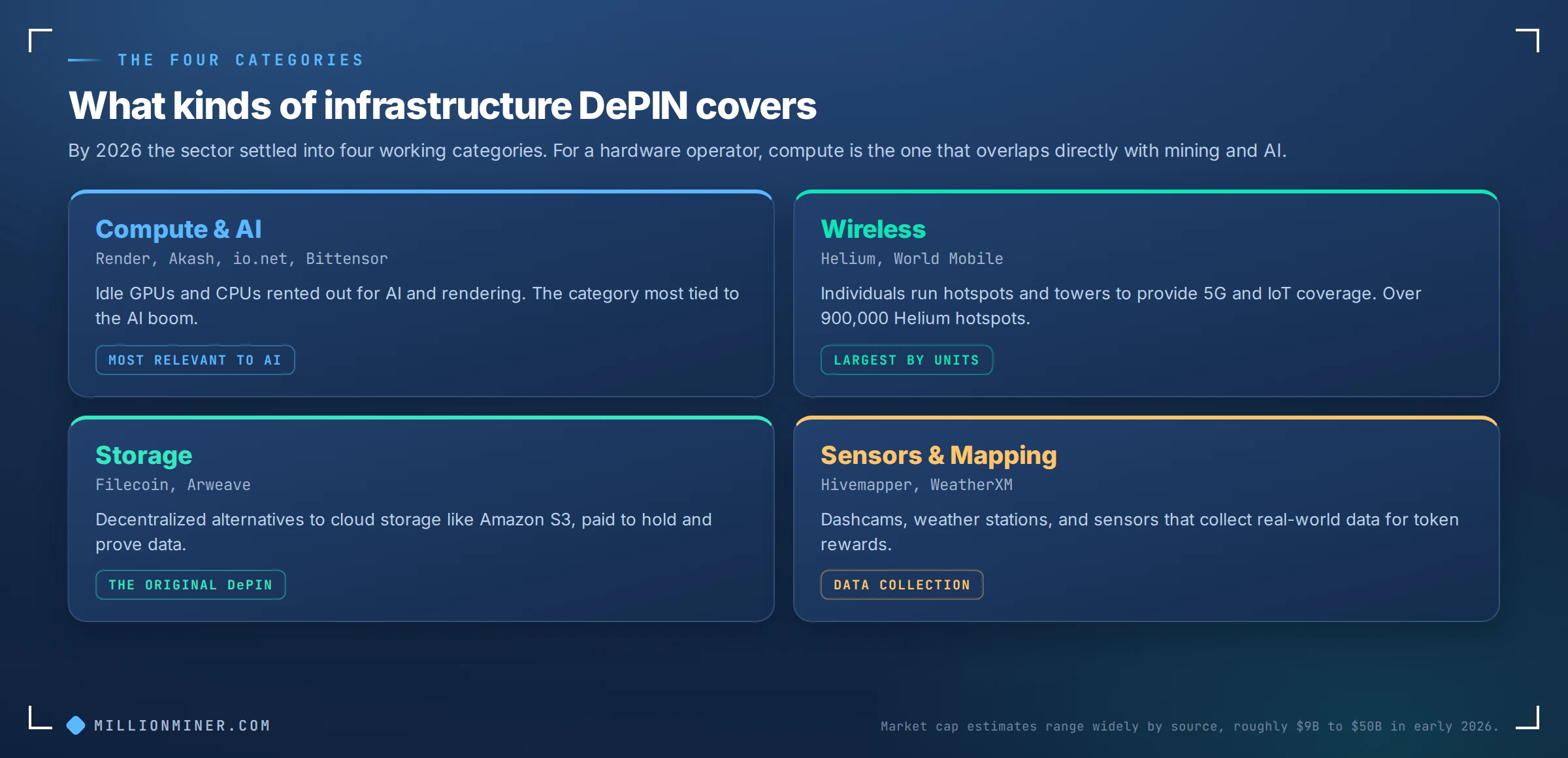
The following table compares leading DePIN projects based on their incentive models, primary use cases, and token utility. This comparison highlights how different economic designs attract specific types of hardware contributors.
| Project | Incentive Model | Primary Use Case | Token Utility |
|---|---|---|---|
| Helium | Proof of Coverage (PoC) | LoRaWAN & 5G IoT | Pay for data transfer & rewards |
| Hivemapper | Proof of Mapping (PoM) | Dashcam mapping | Pay for map data & rewards |
| Render | GPU Rendering Tasks | Edge computing & AI | Pay for render power & rewards |
| IoTeX | Data Contribution | IoT sensor data | Pay for services & governance |
This economic mechanism creates a self-sustaining network effect. As more users join to earn rewards, the network coverage and data quality improve, attracting more enterprises to use the infrastructure. This cycle reduces the capital expenditure required from centralized providers while expanding connectivity to underserved areas. The result is a more resilient and distributed wireless ecosystem.
Market performance and token volatility risks
DePIN projects promise to crowd-build real-world infrastructure using blockchain tokens, but the financial mechanics behind these networks introduce significant volatility. Unlike traditional telecom stocks, DePIN valuations are often tied directly to the utility and adoption of the underlying network, creating a feedback loop where token price and network growth are deeply correlated.
When a DePIN network expands its coverage or user base, demand for the native token typically rises as users need it to pay for services or stake for node operation. However, this same dynamic amplifies downside risk. If network growth stalls or hardware costs rise faster than token rewards, the token price can collapse, undermining the economic incentive for participants to maintain the infrastructure.
The market treats DePIN tokens as high-beta assets, often reacting more sharply to macro trends than to fundamental network metrics. This makes them suitable only for investors who can tolerate sharp drawdowns. Understanding the specific tokenomics of each project is essential, as many rely on inflationary reward schedules that can dilute value if network usage does not keep pace with issuance.
How to join a DePIN network
Participating in a DePIN network turns idle hardware into active infrastructure. You choose a project, configure a node, and earn rewards as the network grows. This workflow applies to most decentralized wireless and compute networks.
1. Select a compatible DePIN project
Review the network’s tokenomics and hardware requirements. Look for projects with clear incentive structures and active communities. Phantom’s guide to DePIN offers a solid baseline for understanding how these networks function and what to expect from early participants.
2. Acquire the necessary hardware
Purchase the specific routers, sensors, or compute units required by the network. Ensure your location offers sufficient coverage or demand for the service. Avoid generic devices; proprietary hardware often ensures better compatibility with the network’s consensus mechanism.
3. Set up a secure wallet
Create a non-custodial wallet compatible with the network’s blockchain. Fund it with the native token for transaction fees and staking. Security is paramount; use hardware wallets for significant holdings to protect your rewards and identity.
4. Install and configure the node
Follow the official documentation to install the node software. Connect your hardware and verify the connection to the network. Most networks provide a dashboard to monitor uptime and performance metrics in real time.
5. Verify and start earning
Wait for the network to recognize your node. Once verified, you begin earning tokens based on your contribution. Monitor your earnings and adjust your setup to maximize performance and reliability.
Review tokenomics and hardware specs before committing funds. Look for active communities and clear roadmaps.
Purchase approved routers or sensors. Ensure your location supports the network’s coverage goals.

Create a secure, non-custodial wallet. Fund it with native tokens for fees and staking.
Install official software and connect hardware. Verify connectivity via the project dashboard.
Wait for verification. Monitor uptime and rewards through the network interface.
Common questions about decentralized wireless
What does DePIN stand for?
DePIN stands for Decentralized Physical Infrastructure Networks. This model leverages blockchain technology and token incentives to crowdsource the deployment of physical infrastructure, such as wireless hotspots, rather than relying on a single centralized provider.
What is a DePIN network?
A DePIN network is a peer-to-peer system where individuals and businesses contribute physical resources—like Wi-Fi coverage or 5G signals—to a shared infrastructure. Instead of a telecom giant building every tower, the network is assembled from thousands of independent nodes, creating a more distributed and resilient connectivity layer.
What is an example of a DePIN?
Helium is a prominent example of a DePIN network. It allows users to deploy mobile or IoT hotspots to provide wireless coverage. In return, hotspot owners earn tokens for validating network coverage and transferring data, effectively crowdsourcing the build-out of a global wireless network.
Who owns the hardware in DePIN?
In a DePIN, the users own and operate the physical infrastructure. This contrasts with traditional telecom models where a single company controls all assets. Ownership gives participants direct control over their equipment and the ability to earn rewards for their contribution to the network.
No comments yet. Be the first to share your thoughts!