7 Networks Disrupting Traditional Telecom
Traditional telecom infrastructure is buckling under the weight of capital expenditures and rigid legacy models. Seven decentralized physical infrastructure networks are now leveraging tokenized incentives to build high-speed wireless coverage at a fraction of the cost, effectively bypassing incumbent gatekeepers.
-

Helium Mobile 5G coverage expansion
Helium Mobile is aggressively scaling its 5G coverage using a decentralized hardware network, allowing users to earn tokens while providing connectivity. This model disrupts traditional telco infrastructure by leveraging community-owned hotspots rather than capital-intensive tower builds. The expansion relies on Proof-of-Coverage protocols to verify signal quality, ensuring reliable service without the heavy overhead of conventional telecom operators. -
Unifi community WiFi hotspot network
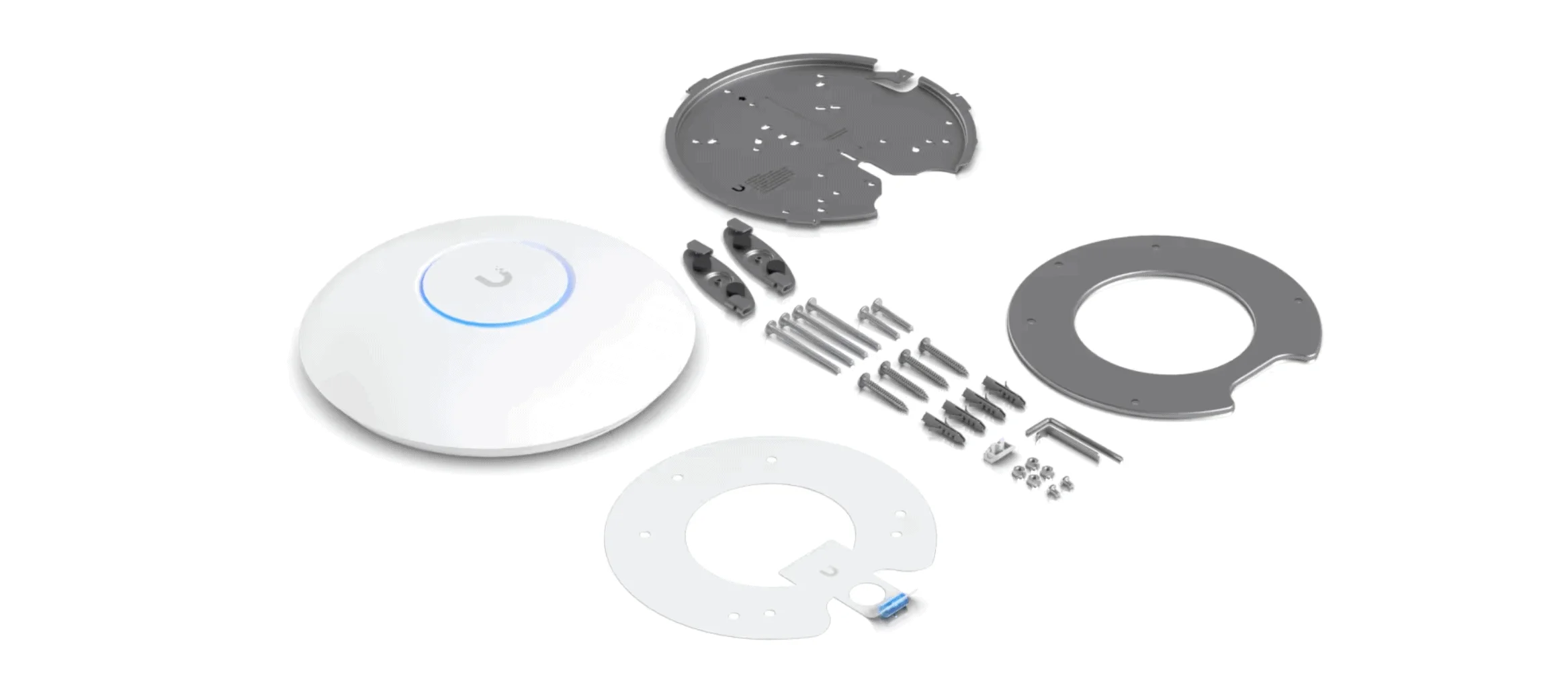
Unifi transforms passive internet users into active network providers by sharing excess bandwidth in exchange for crypto rewards. This crowdsourced approach creates dense urban coverage layers that complement traditional ISPs, offering low-latency connections where fiber is unavailable. By monetizing idle bandwidth, Unifi reduces deployment costs and accelerates access in underserved areas, creating a resilient mesh network driven by local community participation rather than corporate monopolies. -

Dawn Solana-based broadband infrastructure
Dawn leverages Solana’s high throughput to facilitate rapid, low-cost transactions for its decentralized broadband infrastructure. This protocol enables seamless micropayments for data usage, removing friction from traditional billing systems. With significant funding backing its development, Dawn aims to provide scalable internet access by connecting providers and consumers directly. The network’s efficiency allows for real-time verification of service delivery, setting a new standard for transparent and accessible broadband solutions. -

XNET private 5G network solutions
XNET focuses on deploying private 5G networks for enterprises, offering secure, isolated connectivity without relying on public carrier infrastructure. This solution addresses the growing demand for low-latency, high-reliability connections in industrial and commercial settings. By decentralizing network management, XNET provides businesses with greater control over their data and security protocols, reducing dependency on traditional telecom providers and enabling customized network architectures tailored to specific operational needs. -

Tardigrade decentralized storage integration
Tardigrade integrates decentralized storage with wireless networks, allowing users to earn rewards by contributing unused disk space. This synergy between compute and connectivity enhances the utility of DePIN infrastructure, creating a more robust ecosystem. By storing data across a distributed network, Tardigrade ensures redundancy and security, while the wireless component facilitates efficient data transfer. This integration supports the broader DePIN narrative by combining multiple decentralized services into a cohesive, value-generating platform. -
Hivemapper geospatial data mapping
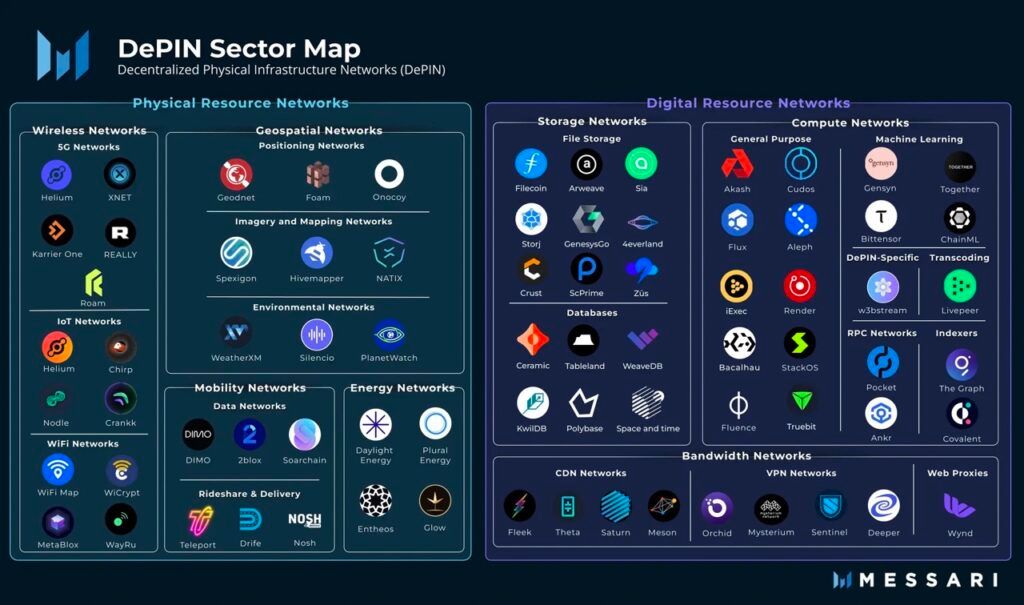
Hivemapper transforms everyday dashcams into a decentralized mapping network, challenging Google Maps with real-time street-level imagery. Contributors earn HONEY tokens for capturing verified road data, creating a resilient, community-driven alternative to corporate surveillance. This model reduces infrastructure costs while providing high-fidelity geospatial updates for autonomous vehicles and logistics firms seeking current, unfiltered visual intelligence. -
LoRaWAN IoT sensor connectivity
LoRaWAN networks enable long-range, low-power communication for industrial sensors without cellular dependency. Devices transmit data over miles using minimal energy, ideal for agriculture, utility metering, and asset tracking in remote areas. By decentralizing this connectivity layer, operators avoid carrier fees and gain direct control over critical infrastructure data streams, ensuring reliable operation where traditional cellular signals fail or prove prohibitively expensive.
What is DePIN wireless
DePIN wireless refers to decentralized physical infrastructure networks that build and operate wireless connectivity without relying on traditional telecommunications carriers. Instead of a single company owning every tower and router, these networks rely on a distributed model where individual users and businesses deploy hardware to extend coverage.
The core mechanism replaces capital-intensive infrastructure builds with a crowdsourced approach. Participants install small, low-cost devices—such as hotspots or gateways—in their homes or businesses. These devices create mesh networks that provide internet access or cellular coverage to nearby users. In return for providing this physical infrastructure, participants are rewarded with cryptocurrency tokens, which can be traded or used within the network ecosystem.
This model fundamentally shifts the economics of connectivity. Traditional telecom requires massive upfront investment in land rights, towers, and fiber optics, costs that are passed on to consumers. DePIN networks leverage existing residential and commercial spaces, reducing the barrier to entry for both providers and users. The token-incentive structure ensures that the network grows organically as more people join to earn rewards, creating a self-sustaining cycle of expansion.
Projects like Helium and DAWN exemplify this shift, offering decentralized broadband and wireless connectivity through Solana and other high-throughput blockchains. By connecting real-world physical networks to digital ledgers, DePINs offer a scalable alternative to legacy telecom, democratizing access to infrastructure while lowering costs for end-users.
Market outlook and risks
DePIN wireless is moving from experimental to essential, but the path to mainstream adoption is paved with regulatory and financial friction. Fixed wireless access allows telecom companies to bypass the cost of running wires from a data center to your house, using wireless links instead. This efficiency is the sector's primary growth engine, yet it places DePIN in direct competition with established infrastructure models. The integration of Web3 with the physical world remains a dominant narrative, but translating tokenized value into reliable service requires navigating complex market dynamics.
Token volatility remains the most immediate risk for both operators and users. Helium’s $HNT token, which powers much of the wireless DePIN ecosystem, fluctuates alongside broader crypto trends rather than local telecom demand. A sharp drop in token price can erase the revenue incentive for hotspot operators, leading to network degradation exactly when reliability is needed most. Investors must watch these price movements closely, as they directly impact the economic sustainability of the coverage.
Regulatory uncertainty adds another layer of complexity. While DePIN projects use blockchain to unlock value from disconnected systems, they often operate in gray areas regarding spectrum licensing and telecommunications law. In the US, the FCC has begun addressing shared spectrum access, but global compliance varies wildly. Operators must balance innovation with legal adherence, as a single regulatory crackdown in a major market can halt expansion.
The path forward requires hybrid models that stabilize revenue while maintaining decentralization. As the sector matures, we expect a shift from pure speculation to utility-driven valuation, where network coverage and data integrity become the primary metrics of success rather than token price alone.
Frequently asked: what to check next
What is an example of a DePIN?
Helium is the most prominent example of a DePIN focused on wireless connectivity. It operates as a decentralized broadband network where users share spare internet bandwidth with neighbors. By running a hotspot, participants help build a shared infrastructure layer rather than relying on a single telecom provider.
Does DePIN have a future in telecom?
The integration of Web3 with the physical world is a defining trend for the current market cycle. DePINs and Tokenized Real-World Assets (RWAs) are driving this shift by allowing decentralized networks to compete with traditional fixed wireless access models.
How does DePIN differ from traditional telecom?
Traditional telecom requires companies to run physical wires from data centers to homes. DePIN uses wireless links and distributed hardware to provide connectivity. This approach reduces the capital expenditure needed for infrastructure rollout and allows for faster deployment in underserved areas.
No comments yet. Be the first to share your thoughts!